EN
 Italiano
 Français
 Deutsch
 Polski
 Nederlands
 Español
 日本語
 Čeština
 简体中文
 Русский
 Português
 한국어
 Magyar
 Norsk
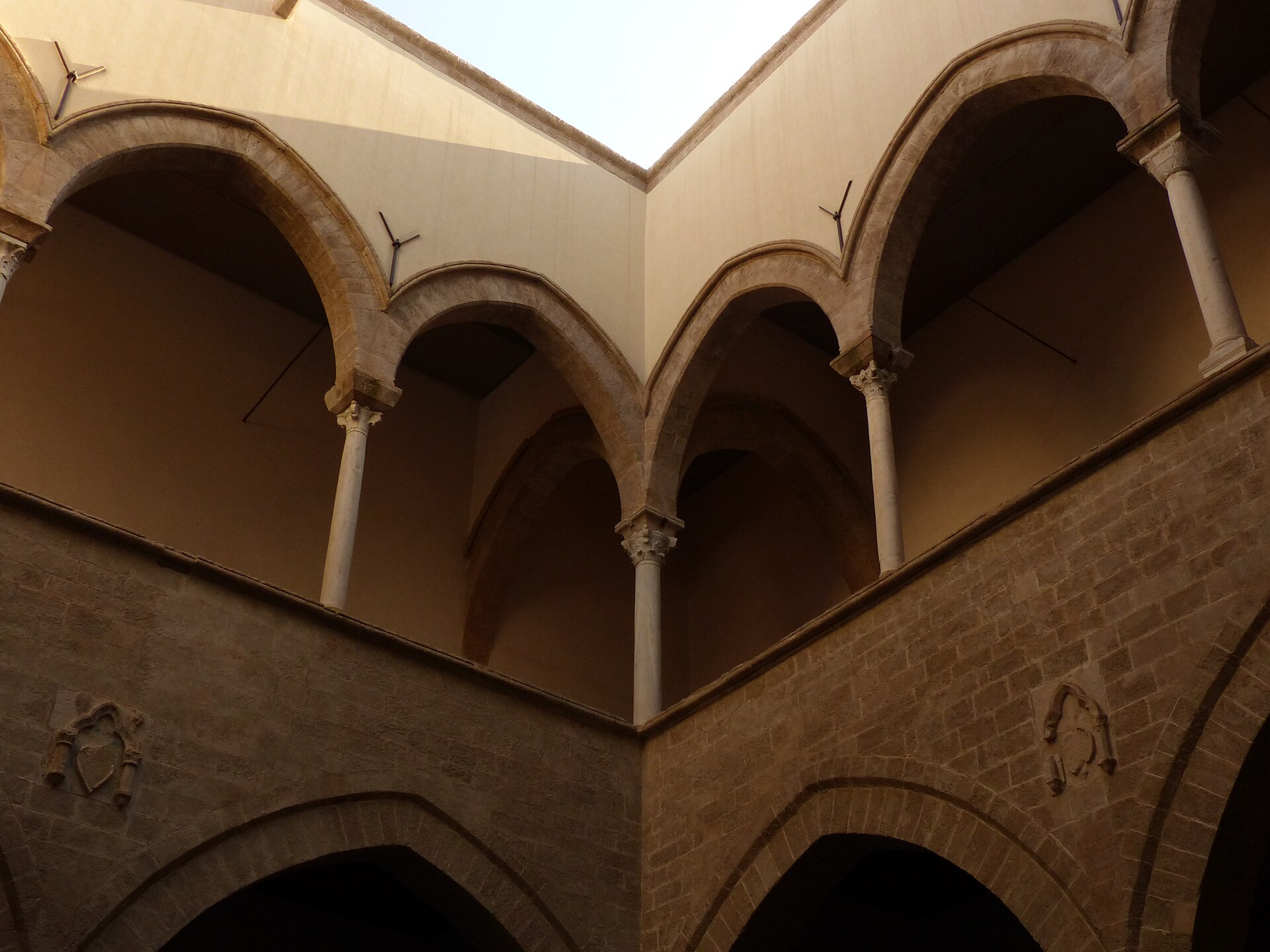
Sicilian Gothic is not a single image to be recognized in every church. It was a movement capable of enduring for a long time and of taking on different forms depending on the territories and contacts with other areas of the Mediterranean. To understand it, one should begin with the period that precedes and accompanies its emergence. After the era of Frederick II, one observes a greater centrality of architectural works commissioned by the dominant families: city palaces and castles became testimonies to the power of these families. In this context, the name of the Chiaramonte identifies a phase of intense patronage, not an isolated decorative motif.
The Steri of the Chiaramonte
The Palazzo dello Steri in Palermo, begun in 1307 and a symbol of the power of the Chiaramonte, is a concrete starting point. A palace of this kind allows one to observe architecture as a public declaration. Its position in the city, the mass of the building and the treatment of its openings express civil and familial authority. It was a seat of representation as well as a residence, and its appearance had to communicate the rank of the family to those passing through the urban space. In Sicilian medieval works, the quality of a portal or a window can reveal links with workshops and tastes that crossed multiple regions. The Steri thus shows both the ambition of a family and the circulation of architectural forms throughout the Mediterranean.
Durazzesque and Catalan
Two currents of Sicilian Gothic can be distinguished: the Durazzesque and the Catalan. The Durazzesque is recognizable also by its depressed arches and spread mainly in the eastern part of the island. The Catalan had a broader presence, with particular prominence in Palermo and with examples in other cities. The distinction is useful, but it should not be used as a label to apply to a building after seeing a single arch. Architectural elements combine with the function of the place and with subsequent transformations. A church or a palace may preserve a medieval portion and, alongside it, interventions of a much later taste.
A wide geography
The geography of these monuments is extensive. Alongside Palermo appear the palaces of Ragusa and Modica, the convent of Santo Spirito in Caltanissetta, the church of the Annunziata in Trapani and that of San Giorgio in Agrigento. Palazzo Corvaia in Taormina and Palazzo Bellomo in Syracuse are also mentioned. This list shows that the Gothic language was not reserved for a single function: it could give form to religious places, residences and spaces of power. Comparing two examples of different types is more instructive than seeking a succession of similar photographs. A religious building invites one to observe the entrance and the space of the liturgy; a palace brings out the relationship between representation and urban life.
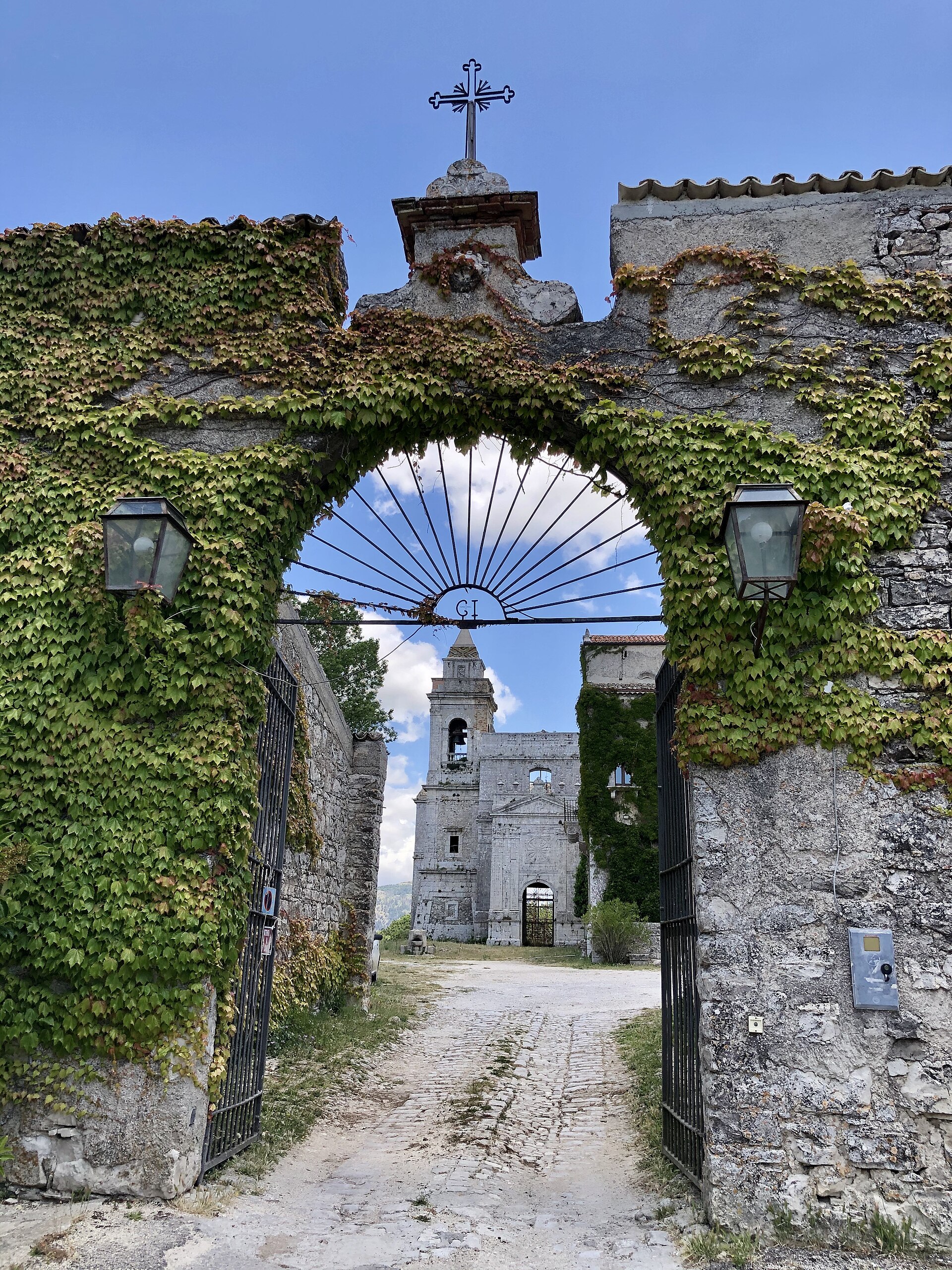
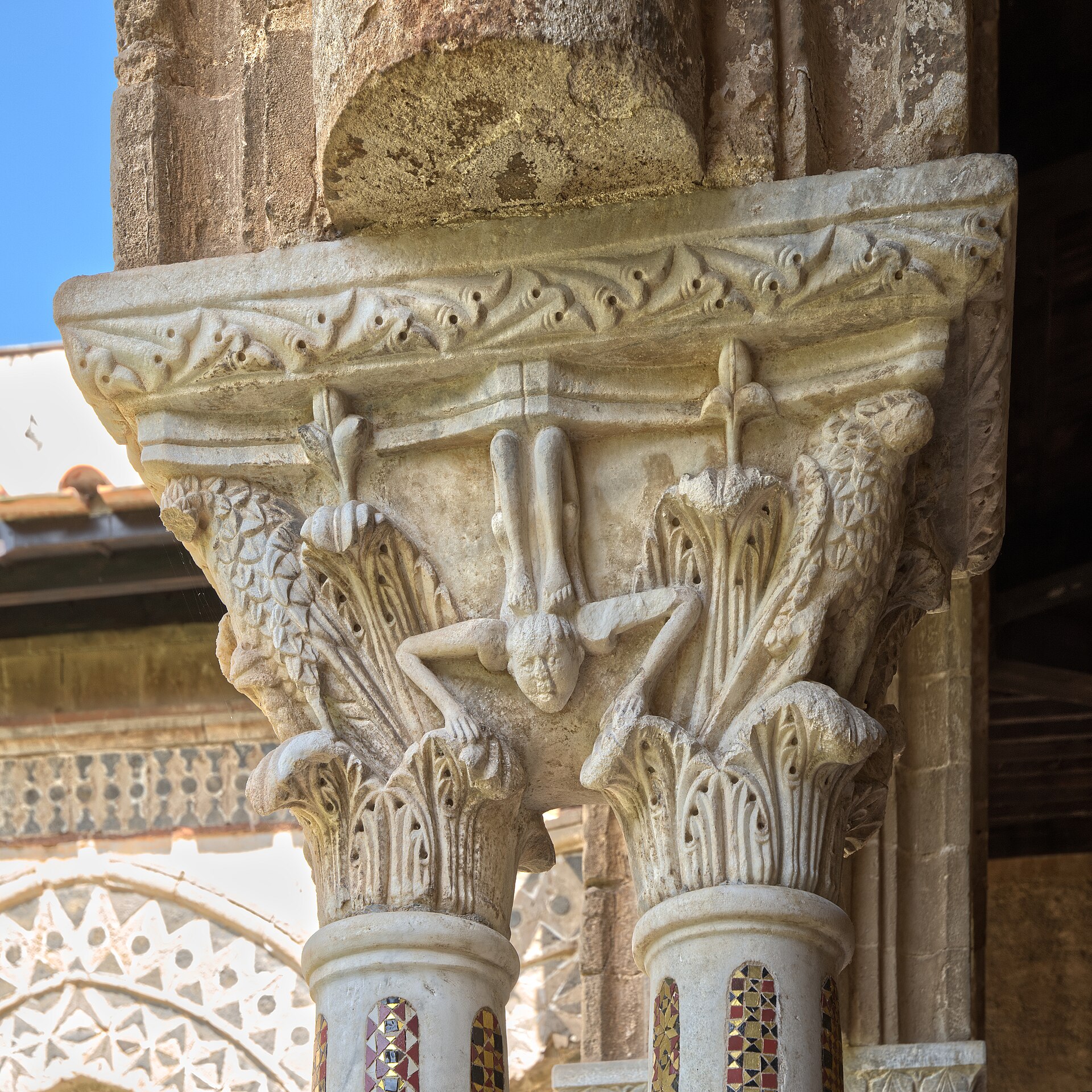
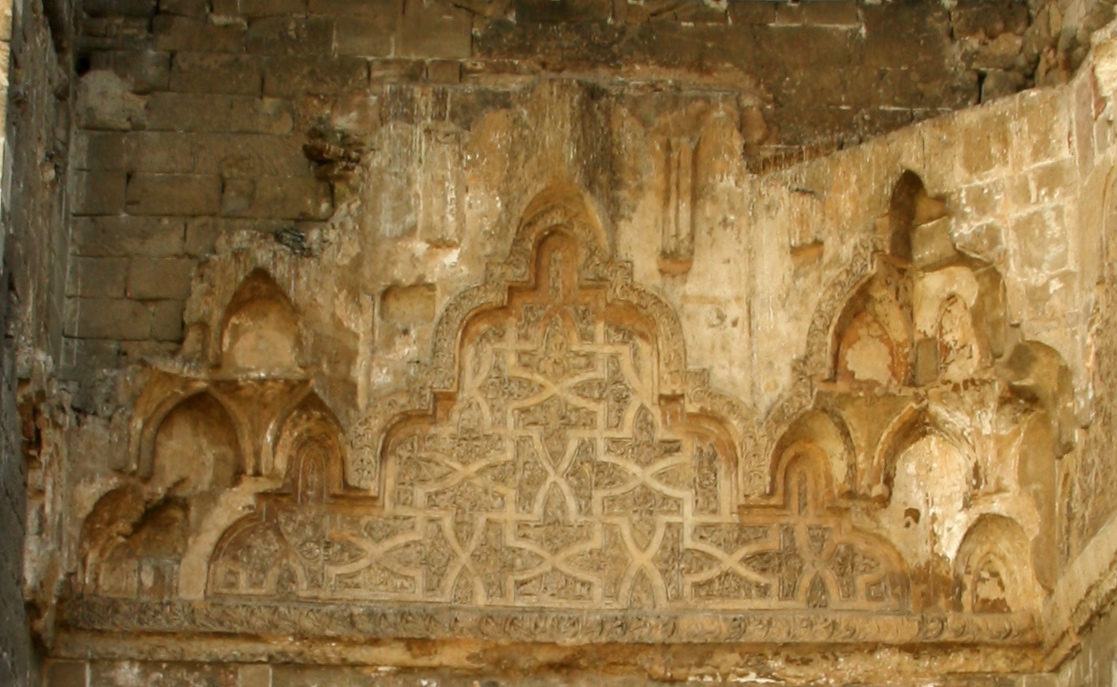
Two details help to recognize the variety of Sicilian Gothic. In Syracuse, the staircase of Palazzo Bellomo belongs to the internal organization of a residence: it connects rooms and accompanies the passage from one space to another. In Erice, the portal of the Chiesa Matrice instead marks a public threshold, where the religious building opens toward the street. Neither element alone is enough to classify an entire monument. One needs to see how it harmonizes with the walls, the openings and the later phases. Placing a staircase and a portal side by side also brings out the difference between civil and religious architecture: Gothic forms were used for concrete tasks, not as a decorative repertoire that was always the same.
Architects, master builders and how to visit
Among the architects, Matteo Carnelivari stands out, to whom Santa Maria della Catena and Palazzo Aiutamicristo in Palermo are linked. The comparison between a church and a palace from the same cultural environment offers an interesting question: which solutions change when the function changes, and which remain recognizable? One need not attribute every feature of a complex building to a single author in order to appreciate this relationship. The works cited indicate rather that the Sicilian late Middle Ages had designers capable of working on different programs and of giving precise form to the demands of their patrons.
During the Chiaramonte period, masters from Tuscany, Lazio and Campania also arrived. The presence of these people helps to explain why speaking of a "Sicilian" style does not mean imagining an isolated island. Ideas and techniques arrived from other places, were selected and adapted to local buildings. The same applies to the relationship with the Catalan area, legible in the name of one of the currents. The result is not a copy of external models, but a series of interpretations that acquire meaning in the territory where they were built.
To visit these monuments, it is useful to adopt a method of comparison. One can choose Palermo as a first observatory, with the Steri, Santa Maria della Catena and Palazzo Aiutamicristo, and then shift one's gaze toward Taormina, Syracuse or Trapani. In each place, one should separate three levels: the original function, the parts preserved and the modifications undergone. This prevents considering as medieval everything that is seen today in a historic building. Sicilian Gothic thus appears as a long season of experiments and adaptations, intertwined with the history of families, cities and Mediterranean contacts. Its richness lies in the differences between monuments as much as in the features that bring them together.
Photo: Benjamín Núñez González · CC BY-SA 4.0 · Wikimedia Commons