EN
 Italiano
 Français
 Deutsch
 Polski
 Nederlands
 Español
 日本語
 Čeština
 简体中文
 Русский
 Português
 한국어
 Magyar
 Norsk
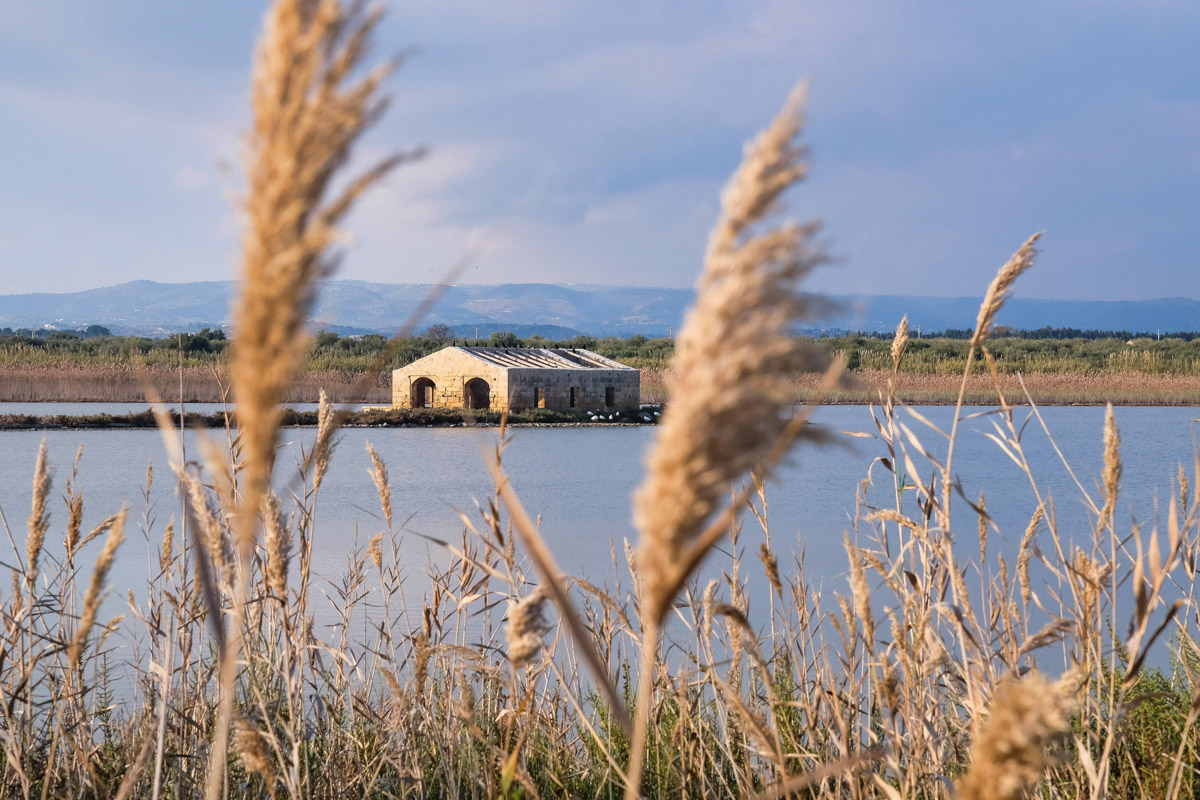
Vendicari, on the coast of southeastern Sicily, is a place where sea, marshes, and coastal vegetation coexist within a short distance. It is an important stopover for migratory birds, but reducing the reserve to a mere ornithological observation point would be limiting. The shallow waters, sandy stretches, rocks, and scrub form a mosaic of environments. Each part harbors different organisms and changes with the seasons. A route that starts from the coast and pauses before a marsh allows one to understand how quickly light, soil, salinity, and animal presence can vary. Vendicari is discovered by observing these transitions, not by rushing toward a single famous panorama.
The marshes and the waders
The marshes are the ecological heart of the oasis. They are shallow waters whose extent and availability depend on seasonal conditions. For traveling birds they represent a place to stop, rest, and seek food. In autumn, herons, little egrets, spoonbills, storks, and flamingos may appear, according to the season and water conditions. This variety does not mean that all these species are seen together: migration is a flow, and the visitor encounters only a moment of it. Distance matters too. Watching the animals from a permitted point, with binoculars, allows one to follow their behavior without forcing them to leave an area useful for feeding.
Wading birds reveal how much a few centimeters of water matter. Among the waders one encounters little stints, Kentish plovers, dunlins, black-tailed godwits, and spotted redshanks, names that can confuse those beginning to observe them. One can start from the simplest differences: the length of legs and bill, the way they walk along the edge, the depth of water in which they search for food. Where the mud is exposed, the animals can probe the ground; where the water rises, others find better conditions. A marsh is therefore not a flat, motionless surface. It is a collection of shifting margins, and precisely these margins explain the presence of so many different birds.
Winter at the reserve
During winter, the picture changes. In this season one encounters ducks, coots, gulls, and cormorants, species that use the water bodies and the coast in different ways. In spring and summer, nesting species also become prominent, among them the black-winged stilt, which nests in suitable environments. The needs of a bird that stops for a few hours do not coincide with those of one that builds a nest and raises its young. For this reason, respecting restricted areas, even when they appear empty, is essential. Eggs and chicks can be difficult to notice, while repeated disturbance can have consequences that a simple visit does not make visible.
Plants and dunes
The vegetation tells another story. Near the rocky coast are plants capable of withstanding salt and wind, such as sea fennel, spiny chicory, and Syracuse sea lavender found along the shore. Where the terrain changes and the direct influence of spray diminishes, thyme, dwarf palm, lentisk, myrtle, and wild olive appear. On the dunes, the Phoenician juniper helps shape a fragile environment. Mandrake and orchids are also found in suitable areas. A visitor can use these differences to read the landscape: plants indicate exposure, soil type, and water availability at least as much as maps and signs.
The dunes deserve particular slowness. From a distance they seem merely sandy ridges between the sea and the hinterland; up close one understands that the plants' roots help hold the material together and build small shelters. Walking along unauthorized paths can break this structure, opening gaps that the wind widens. At the same time the dunes are a transition zone between salt water, shifting sand, and inland marshes. Describing them together with the birds restores to Vendicari its complexity. The beauty of the beach also depends on ecological processes that do not stand out in images taken from above.
From the sea to the marshes
To understand Vendicari one can follow the transition from sea to marshes. On rocks beaten by spray grow plants different from those that stabilize the sand; behind them, the shallow water attracts passing birds. The change can occur within a few hundred meters, but it implies different salinity, soils, and water availability. Pausing before a marsh and then turning toward the dune makes this proximity visible. It is useful to consult the permitted access points and choose a route that leaves time to observe both bands. Vendicari loses much of its meaning if the beach is treated as an isolated destination and the marsh as a mere detour.
The richness of Vendicari depends on the fact that its environments remain connected. Migrants need shallow waters where they can feed and quiet places where they can rest; nesting species require yet other conditions. The dunes hold the sand and protect the inland habitats, while the scrub offers shelter and serves as a passage toward more stable ground. If one looks only at the flamingo or only at the beach, these relationships escape notice. A well-made excursion leaves instead a more complete picture: the same stretch of coast, through variations in soil and water, supports different plants and animals over the course of the year. It is this continuity that explains the value of the oasis.
Photo: SkylarStars · CC BY-SA 4.0 · Wikimedia Commons