EN
 Italiano
 Français
 Deutsch
 Polski
 Nederlands
 Español
 日本語
 Čeština
 简体中文
 Русский
 Português
 한국어
 Magyar
 Norsk
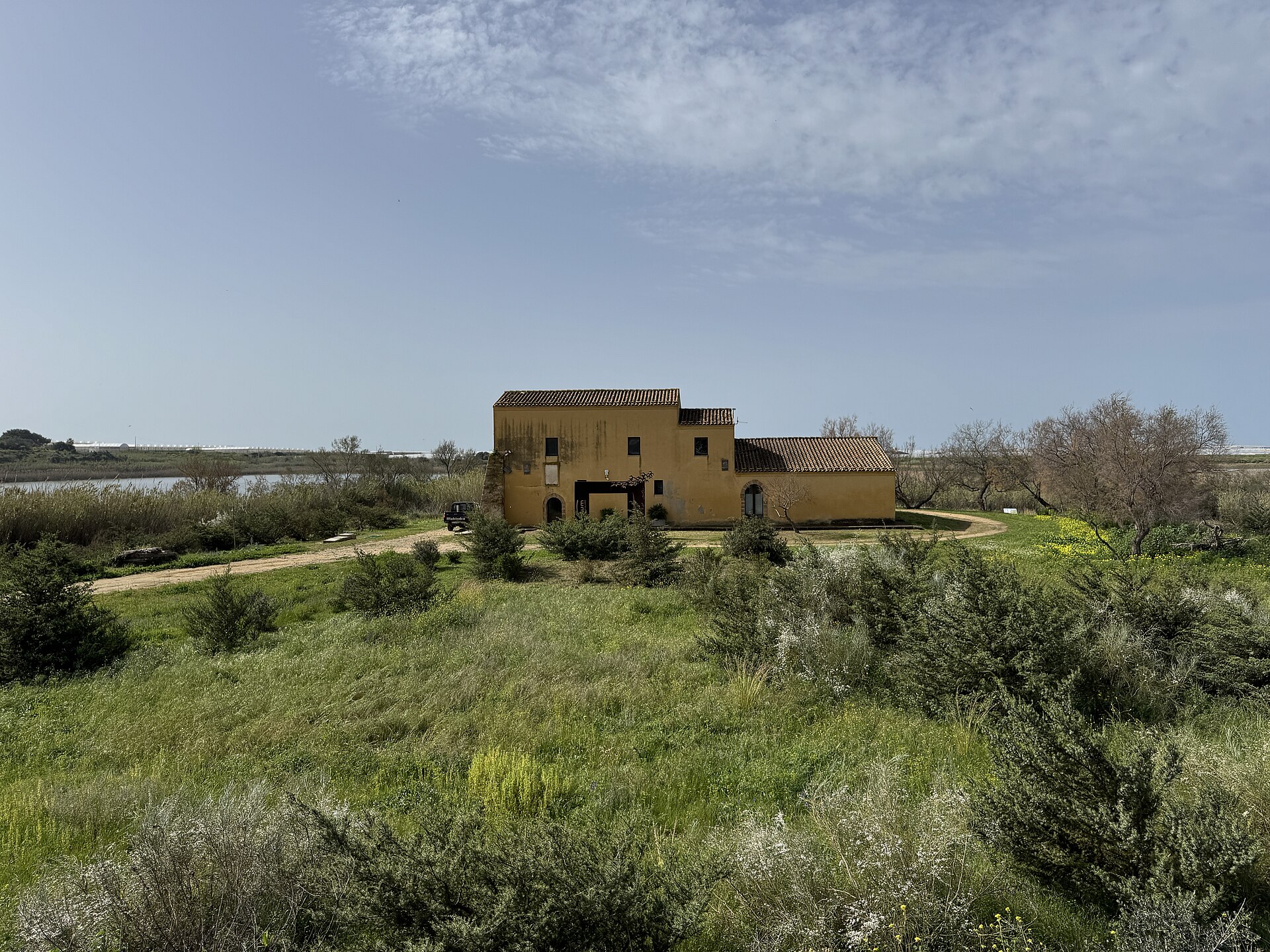
The Biviere di Gela is one of the places where Sicily demonstrates the value of wetland environments for bird life. It lies between Gela and the mouth of the Dirillo, in a territory that encompasses the lake, its shores, and nearby environments such as dunes and wetlands. Visitors who arrive unprepared may see only a stretch of water and reed beds; looking more closely, they discover a web of spaces with different depths, vegetation, and functions. The lake is a stopover for many migratory species and, in certain seasons, a wintering area. Its interest therefore also lies in its connection to routes that extend far beyond the borders of Sicily.
Ducks and herons
Ducks are among the most recognizable birds at the Biviere, but they form anything but a uniform group. The pochard dives to search for food; wigeon, gadwall, pintail, mallard, and shoveler exploit shallower waters in different ways. The shoveler, in particular, stands out for its large bill suited to filtering water. Watching how they feed helps one understand why the lake needs both open areas and protected, vegetated margins. A group seen from a distance may appear to consist of identical animals; binoculars make it possible to recognize shapes and behaviors without forcing the birds to move. Identification thus arises from observing the habitat, not from a list of names learned before the visit.
In spring the Biviere also welcomes herons, little egrets, and squacco herons. Less common species may appear, including the bittern, the glossy ibis, and the ferruginous duck; at certain times terns also arrive. Such an extensive list should be interpreted as an index of habitat variety, not as a checklist to be completed in a single day. The success of observation depends on shifting factors: water, season, wind, time of day, and the tranquility of the sites. Even if a rare species does not appear, the passage of a heron between two reed beds or a tern skimming the water's surface makes the lake's role visible.
Reed beds and water plants
Bands of reeds and cattails are essential. They offer shelter and nesting sites to birds that remain hidden far more often than they show themselves. Among the reed-bed species are reed warblers and penduline tits, as well as coots, moorhens, and little grebes. Listening to calls can be more effective than trying to penetrate the reeds with one's gaze. The vertical stalks protect nests, but they also constitute an environment of insects and small organisms on which other animals depend. For this reason the vegetated edge is not an empty space blocking the view of the lake: it is one of its most alive parts.
The aquatic environment continues beneath the surface. Submerged plants grow in the water; rushes and tamarisks are found along the shallower margins. These elements shape feeding and refuge sites. A change in water level can expose muddy banks useful to certain birds and flood others. Dry or rainy seasons also alter the relationship between open water and vegetation. Those who return to the Biviere several times can observe precisely this mobility of the landscape. A photograph taken in one month does not necessarily describe what will be found in the next, and this variability is part of the natural functioning of the wetland.
Dunes, meadows and other animals
Around the lake one encounters wet meadows, tamarisks, orchids, thyme, and rosemary; toward the coast appear dunes with plants adapted to sand, including white broom and sea holly. The proximity of such different environments explains why the reserve cannot be understood by looking only at the water. The dunes mediate the relationship with the sea, the meadows sustain insects and blossoms, the scrub provides shelter. The transition from one environment to another is rapid but significant. A route that respects the paths allows one to compare plants without damaging soils and nests that are difficult to spot.
Terrestrial fauna completes the picture with foxes, rabbits, weasels, reptiles, amphibians, and dragonflies present in the area. Major sightings attract attention, but the dragonflies patrolling the water or the amphibians in the pools tell the story of the system's quality just as concretely. In summer one may encounter the stone-curlew, tied to open spaces and particular conditions. Each species adds a clue about how the mosaic functions: some need permanent water, others mud, still others nearby dry areas. Conserving the Biviere requires maintaining this variety, not only the central expanse of the lake.
Who arrives and who stays
A visit makes clear a crucial distinction: the Biviere does not always host the same birds. Some arrive during migration, others spend the winter there; still others find a place to nest in the reed beds. Muddy shores, open water, and dense vegetation support different phases of these lives. Noting the season, the water level, and the animals' behavior allows one to understand why a spring observation may differ from a winter one. Staying in permitted areas and keeping one's distance protects precisely the time that birds spend here to feed or rest. The lake appears motionless on the map, but it is a stopover on journeys that cross the Mediterranean.
Photo: Codas · CC BY-SA 4.0 · Wikimedia Commons