EN
 Italiano
 Français
 Deutsch
 Polski
 Nederlands
 Español
 日本語
 Čeština
 简体中文
 Русский
 Português
 한국어
 Magyar
 Norsk
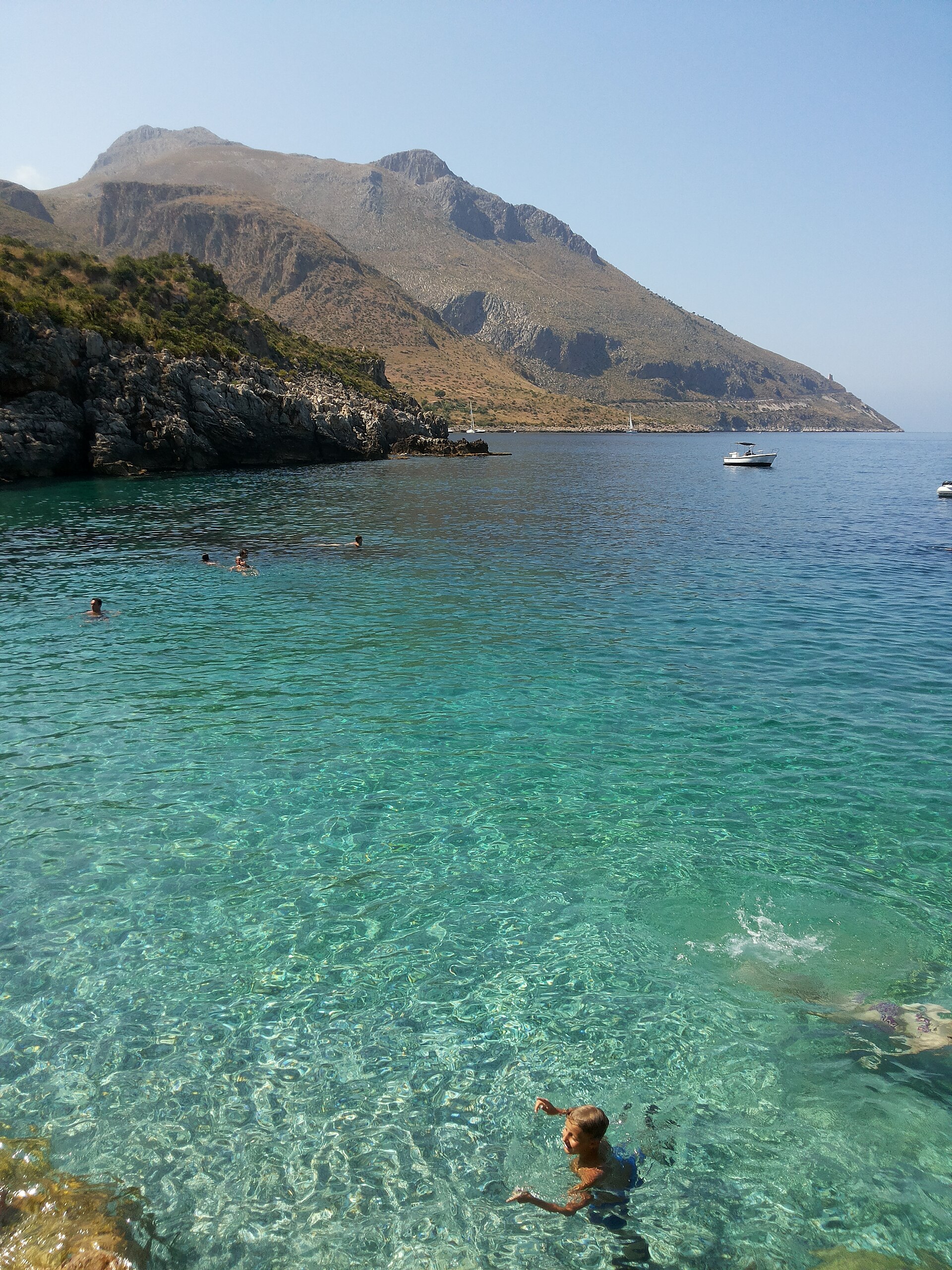
The Zingaro Nature Reserve occupies a stretch of the northwestern Sicilian coast between Scopello and San Vito Lo Capo. It was the first reserve established in Sicily, a place where the protection of nature changed the way the coastline is viewed. The coastal path follows for about seven kilometers a succession of promontories, coves, and slopes. The distance alone says little: the terrain, the sun, and the stops transform the walk into a longer experience than a line on a map might suggest. The value of the place lies in the possibility of observing the sea and the mountains together, from the rock close to the water up to the heights that rise well above the main path.
Plants among the rocks
The coast is not a simple sequence of beaches. Cliffs and escarpments offer small spaces to plants capable of taking root in the rock and enduring wind and salt spray. A little further inland, garrigue and Mediterranean scrub appear. The dwarf palm is one of the most recognizable plant elements of the Zingaro. Its presence tells of dry and sunny conditions, but the landscape is not uniform. A bend in the path may expose plants to the wind, while a sheltered little valley retains more moisture. Observing these changes helps one recognize the reserve as a collection of micro-environments, not as an unchanging backdrop for photographs of the sea.
Among the plants of the reserve are Todaro's sea lavender, the perpetual pink, the little carnation, the Sicilian cornflower, the baldmoney, and wild cabbage. Some names evoke rare species or those tied to particular environments. For the visitor, it is not necessary to identify them all; it is more useful to understand why their presence matters. A plant that grows on an arid slope, in a crevice, or near the spray occupies a place shaped by many factors. Footsteps off the path can damage precisely the least conspicuous specimens. Leaving leaves, flowers, and seeds untouched makes it possible for those who come later to observe the complete cycle of the vegetation.
Eagles, falcons and other animals
The fauna broadens the view. One can observe eagles, hawks, ravens, partridges, and solitary sparrows, as well as mammals such as the fox and the porcupine. These are animals that use the coast and the heights in different ways. Birds of prey exploit currents and cliffs, smaller birds can find shelter in the vegetation, and mammals range over areas that the visitor only partly traverses. Those walking on the path may not see any of the better-known species. Calls, distant flights, and tracks nonetheless remain opportunities for observation. Binoculars and a few silent stops often yield better results than a hurried march from one cove to the next.
The reserve’s sea
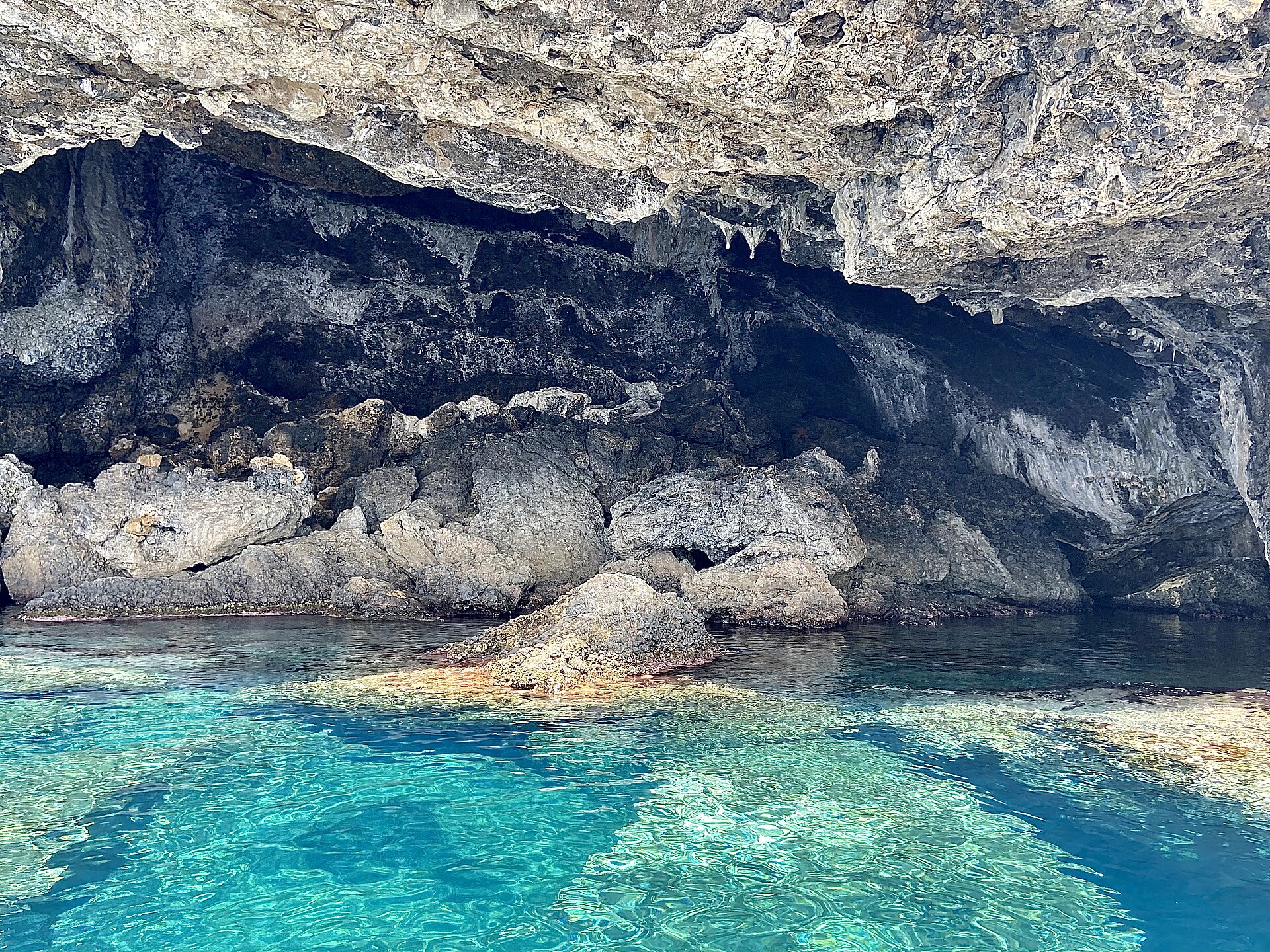
The sea adds another layer to the reserve. It hosts algae, anemones, and red coral, organisms associated with different conditions and depths. The transparency of the water can make a seabed seem close that in reality requires experience to observe. Even while staying on the surface, one can recognize the transition between emerged rock, the zone beaten by waves, and the submerged environment. The relationship between terrestrial and marine environments is essential: what descends from the slopes, the way the coast is frequented, and respect for the seabed all contribute to the overall quality of the place. A cove is more interesting when considered part of an ecological system.
The trail and the high ground
The roughly seven kilometers of the coastal path should not be read as a simple measure of the distance between Scopello and San Vito Lo Capo. The route descends and climbs around the coves, crosses stretches exposed to the sun, and opens ever-different views of the cliffs. Stopping only where one can swim means missing the link between elevation and coast that defines the reserve. It is wise to decide in advance how far to walk and where to rest, taking into account the heat, the scarce shade in some sections, and any changes in access. Water and suitable footwear allow one to devote time to observation, instead of turning the route into a race toward the next cove.
Exploring the Zingaro also means looking upward. The reserve rises to significant elevations, beyond the immediately coastal belt. The relief explains the presence of different environments in a relatively contained space. From the coast one can make out ravines and ridges; from the high points the profile of the sea changes and the coves become elements of a broader geography. Those who choose inland paths encounter conditions different from those of walks near the water and must prepare accordingly. The continuity between sea and mountain is perhaps the most instructive feature of the reserve: it offers, in a single day, the chance to read slopes, exposures, and vegetation as parts of the same landscape.
Having been the first reserve established in Sicily also gives the Zingaro a historical value: this stretch of coast showed that protecting a landscape means safeguarding more than its view of the sea. The dwarf palm, the rare plants of the crevices, the flight of birds of prey, and the submerged organisms belong to different but connected zones. A path kept within its boundaries preserves precisely the margins where the least conspicuous species grow; a cove frequented with restraint conserves the continuity between coast and seabed. When one looks at the promontory from the shore, or at the sea from the higher elevations, one understands the result of protection: not a static panorama, but a landscape capable of continuing to live.
Photo: Daniele Pugliesi · CC BY-SA 4.0 · Wikimedia Commons