EN
 Italiano
 Français
 Deutsch
 Polski
 Nederlands
 Español
 日本語
 Čeština
 简体中文
 Русский
 Português
 한국어
 Magyar
 Norsk
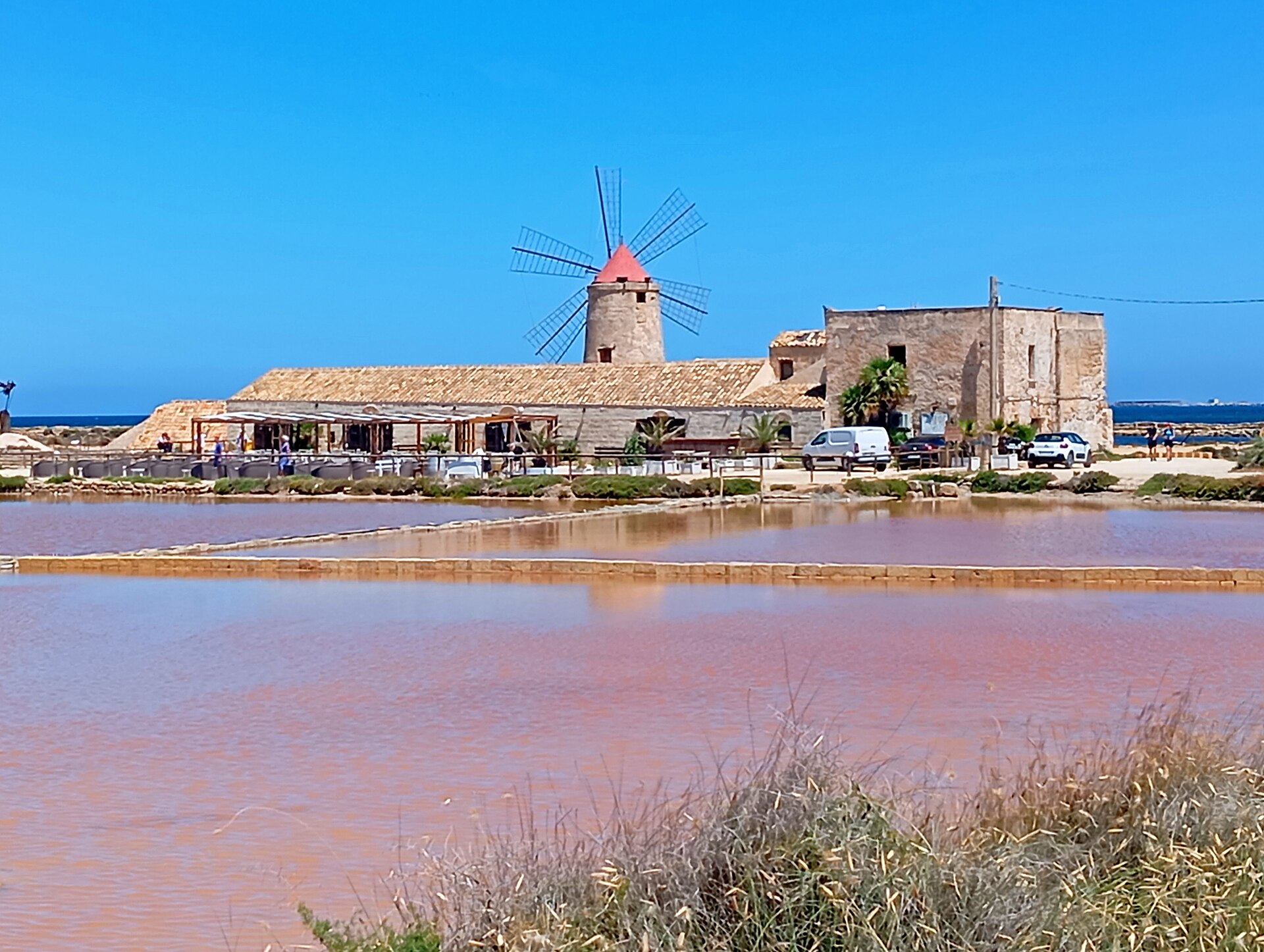
Between the port of Trapani and the Salina Grande area stretches a landscape shaped by the meeting of sea, wind, sun, and human labor. The salt pans of Trapani and Paceco form a reserve in which the artificial basins have also taken on great natural value. From a distance the eye takes in expanses of water, low embankments, and windmills; up close, differences in color, depth, and salinity emerge. This is not a marsh that arose without human intervention, nor a simple open-air factory: its identity depends on the historic operation of salt production and on the presence of organisms that have found a suitable environment in the basins.
How salt is made
The salt process begins with the movement of seawater between separate basins. The level is regulated through channels and passages so as to encourage gradual evaporation. When the concentration increases, the salt crystallizes in the basins intended for harvesting. Ideally following this path changes the way one looks at the salt pan. Two neighboring bodies of water can have very different characteristics; not everything that looks identical in a photograph serves the same function. The sun provides energy, the wind accelerates evaporation, and the embankments make it possible to govern the flow. The geometry of the basins is therefore a visible form of knowledge of the territory.
The windmills
The windmills are the best-known symbol of this coast, but they have a function that goes beyond their picturesque appearance. Models with six wooden sails are remembered, as are others with numerous metal blades. Their presence recalls the work of lifting or moving water and the need to harness the available wind. Beside the windmills, the bagli of the salt pans tell of other aspects of productive life: in the past they could house tools and workers. Looking at basins, buildings, and machinery together makes it possible to understand the salt pan as a landscape of labor. The built forms are not decorations added to nature; they helped create the environment that many birds use today.
The birds of the reserve
The wildlife value is in fact one of the main reasons for visiting the reserve. The reserve hosts numerous species of birds, many of which stop over during migration. Flamingos, spoonbills, herons, and little egrets may appear in the bodies of water; among the waders are avocets and black-winged stilts, with their different ways of searching for food in the shallow water. Even raptors of wetland environments, such as the marsh harrier, are part of the picture. The list is not a promise of sightings: season, time of day, water level, and the tranquility of the basins all affect what one sees. The richness lies in the salt pan's function as a place of rest and feeding along a broader journey.
To observe birds, it is useful to start from their behavior. Some sift the water with their beaks, others walk in the mud, others rest on the embankments. Distance and a pair of binoculars make it possible to grasp these differences without forcing the birds to move. Spring and autumn are interesting periods for migration, but the landscape changes throughout the entire year. In summer the salt harvest can bring out the productive dimension; in the cooler seasons the presence of birdlife and the light on the basins offer other readings. Returning at different times means discovering that the salt pan is a system in motion, not a fixed image.
Plants and wetlands along the coast
Vegetation also has a role, even though it may appear discreet before the large expanses of water. Plants such as sea lavender and sea marigold grow here, able to live in environments marked by salinity. Along the embankments, different species occupy small variations in elevation and moisture. Their ecological task does not end with the color of their flowers: they offer shelter, contribute to the structure of habitats, and signal particular soil conditions. Walking on the permitted paths protects these communities, which can easily be damaged by foot traffic. The contrast between the geometric appearance of the salt pan and the spontaneity of the vegetation makes the place particularly interesting.
Along the western coast, the salt pans of Trapani and Paceco enter into ecological dialogue with other shallow-water environments, including the Stagnone di Marsala. They are distinct places, shaped by different histories, but migratory birds can use multiple stops along the same coastline. What determines their stopover is water level, food availability, and tranquility, not the boundaries drawn on a map. Even within a single salt pan, the basins can offer different conditions on the same day. This is why observing a group of avocets in one basin and flamingos in another is a concrete way of reading the system, beyond the first impression of bodies of water that all look alike.
The geometric design of the basins is therefore the visible trace of an ancient labor, while the presence of birds shows how a built environment can also acquire natural value. The visitor can follow both stories in the same glance: the windmill recalls the regulation of water, the pale crust marks its evaporation, and the wader searching for food reveals its usefulness for wildlife. The landscape changes with the harvest season and with the migration season, without losing the relationship between the two. It is this precise relationship, more than the mere image of windmills at sunset, that makes the salt pans of Trapani and Paceco unique.
Photo: Malcanton · CC BY-SA 4.0 · Wikimedia Commons