EN
EN Italiano
 Français
 Deutsch
 Polski
 Nederlands
 Español
 日本語
日本語 Čeština
 简体中文
简体中文 Русский
 Português
 한국어
한국어 Magyar
 Norsk
Norsk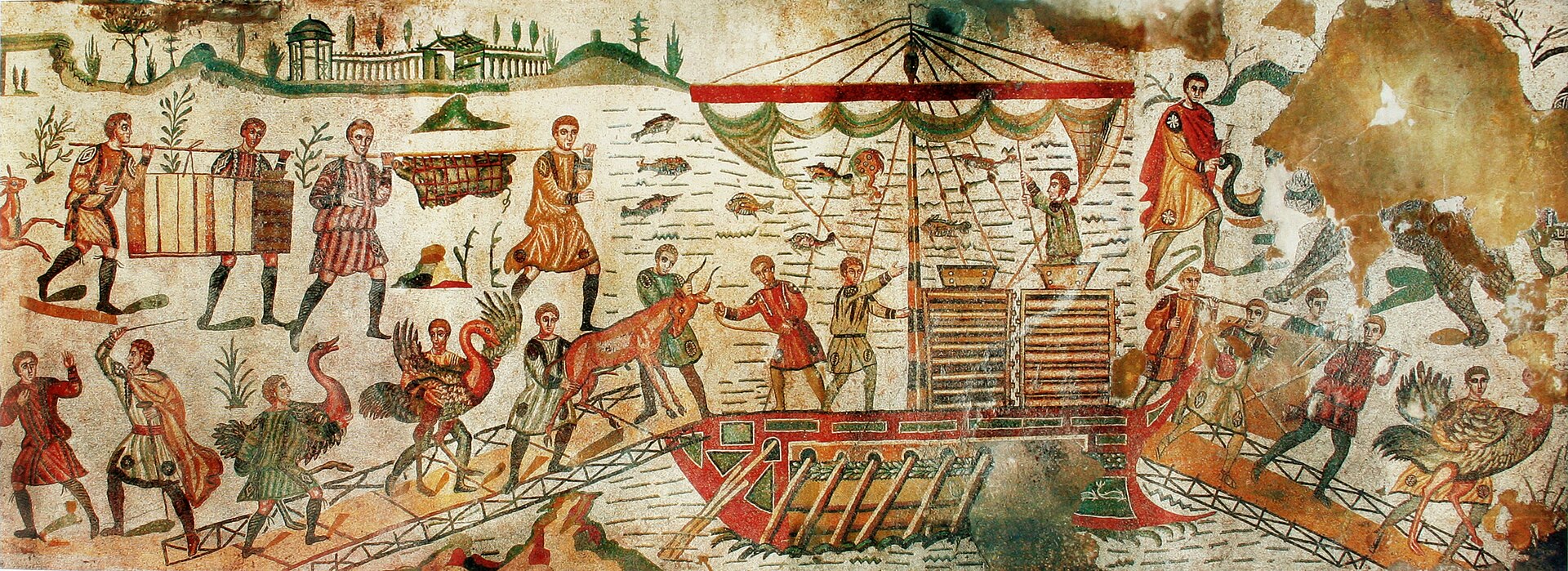
The passage of Sicily under Roman rule was the result of a long contest for control of the Mediterranean. The Roman conquest must be read against the backdrop of rivalries among Sicilian cities, the Carthaginian presence, and the new weight assumed by Rome. The affairs of Pyrrhus and Hiero II belong to the decades that preceded and accompanied the Punic Wars. For the island, this was not an immediate replacement of all its institutions: cities and territories entered progressively into a broader political system. Sicily's position, useful for trade and military operations, made it a decisive prize.
The first Roman province
Sicily became the first Roman province in 227 BC, entering permanently into the political system of the republic. Syracuse, however, maintained its own political history for some time longer and capitulated in 212 BC before Marcus Claudius Marcellus. These two dates help explain why the conquest cannot be reduced to a single episode. Rome had to build its control while wars and alliances continued. Sicilian cities found themselves weighing which side to take, often under changing conditions. The case of Hiero II, who altered his alliances, shows how much local choices depended on the strength of the contenders.
Grain, roads and trade
Once incorporated into Roman dominion, the island played a notable economic role thanks to its cultivable lands. The expression "granary of Rome" sums up the importance of the agricultural supply guaranteed by Sicilian lands. Behind this formula lay fields, laborers, landowners, transport, and tax levies. The relationship with Rome offered access to a broader commercial system, but subjected communities to heavy demands. The conquest led to the loss of part of the artistic heritage and reduced local autonomy, even when certain civic structures formally remained in place. To understand the province, one must look at both the opportunities and the costs of its operation.
Roads were an essential instrument. Connections designed also for the movement of legions facilitated trade between cities and territories. A road network does not serve an army alone: it links cities, countryside, ports, and markets. Roman Sicily lived within flows of goods and people that extended beyond the island's boundaries. Trade with other western provinces was accompanied by transformations in the distribution of land. Latifundia, large agricultural estates, reveal a less monumental but fundamental aspect of the period. The way the land was organized affected the lives of those who cultivated it and the civic economy.
Revolts and civil wars
Slave revolts reveal the tensions produced by an economic system founded also on the extensive exploitation of labor. One cannot understand the mosaics and villas of the Roman era while forgetting the labor that sustained the wealth. The arrival of many slaves and the concentration of properties created conditions for conflict. The revolts were harshly suppressed, but their memory prevents us from recounting the province solely through the efficiency of its roads or the beauty of its aristocratic houses. Roman Sicily was inhabited by people of very different social positions, who did not experience the island's prosperity in the same way.
The effects of Rome's civil wars reached Sicily as well. The case of Sextus Pompeius shows the island's strategic importance: control of cities in the eastern part and the blockade of grain supplies weighed on Rome. Octavian defeated him and reorganized power, also modifying the tax system. Taxation changed over time, with the transition from the tithe on the harvest to a tax tied to property. These are administrative changes that may seem remote from a visit to an archaeological site, but they affect the concrete life of communities: they establish who pays, on what basis, and with what consequences for the use of land.
Mosaics, amphitheatres and a changing role
The mosaic of the Roman Villa del Casale at Piazza Armerina, the amphitheaters of Catania and Syracuse, and a Roman statue of Venus preserved in the Paolo Orsi museum testify to diverse forms of Roman art. These testimonies have different scales and functions. A mosaic belongs to an inhabited and decorated space; an amphitheater recalls public spectacles; a statue reveals artistic choices and forms of representation. The villa documents above all the taste and economic possibilities of those who could commission it: it does not, by itself, describe the life of the majority of agricultural workers. Seeing these works alongside the Greek remains allows us to recognize continuities and transformations. Sicilian cities did not start from scratch with Rome: earlier structures and memories were reused, adapted, or flanked by new works.
Over time, grain from North Africa reduced Rome's dependence on Sicilian harvests. The island continued to be inhabited, cultivated, and traversed by trade, but its place in the imperial economy changed. In the same period, Christian communities formed and new funerary practices appeared, signs of a gradual religious transformation. A villa like that of Casale, an urban amphitheater, and an agricultural area tell different aspects of this history: the luxury of a residence, public spectacles, and the labor on which production depended. Connecting them means recognizing that the province was not merely a conquered territory. It was a society in motion, marked simultaneously by Greek continuities, Roman institutions, social inequalities, and new forms of worship.
Photo: Unknown authorUnknown author · Public domain · Wikimedia Commons