EN
 Italiano
 Français
 Deutsch
 Polski
 Nederlands
 Español
 日本語
 Čeština
 简体中文
 Русский
 Português
 한국어
 Magyar
 Norsk
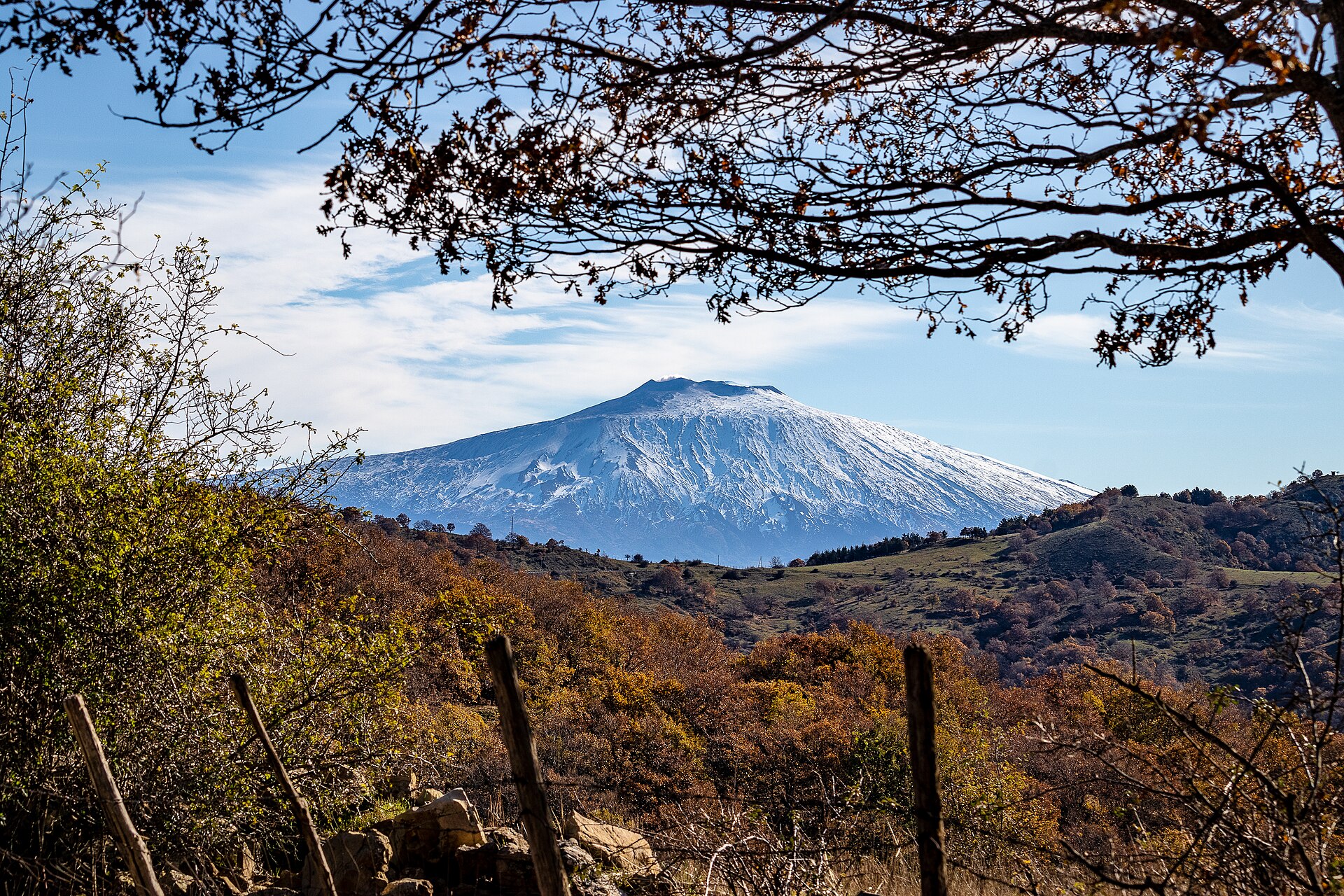
Anyone who crosses the Nebrodi encounters a Sicily that surprises those who imagine the island only as a succession of sun-drenched coasts. The highlands rise behind the Tyrrhenian Sea, embracing extensive forests, clearings, and waterways, and change their appearance with altitude. The park encompasses territories of numerous municipalities in the provinces of Messina, Catania, and Enna. This breadth is a key to reading it: it is not a single panorama to be reached, but a mosaic of slopes, environments, and villages that deserve slow time. An itinerary in the Nebrodi can begin by observing the transition from the Mediterranean belt to the mountain forests, a transformation that makes tangible the relationship between climate, altitude, and plant life.
The Mediterranean scrub
At lower elevations, evergreen scrub dominates. Myrtle, lentisk, strawberry tree, and brooms accompany the areas where the sun and the influence of the sea remain strongest. Holm oaks and cork oaks are also found, trees capable of marking the landscape with their own forms. The leathery leaves of the scrub, the resinous scents, and the plants' resistance to drought tell of a balance built around dry summers. But one need only climb for the picture to change. Where the air becomes cooler, forests of deciduous oaks appear: downy oak, sessile oak, and turkey oak. Their canopies filter light differently from those of the evergreens, and the falling of the leaves marks the seasons with a rhythm evident even to those who visit the park for just a day.
Beech woods and water
Higher up, the beech forests are one of the most recognizable features of the Nebrodi. They extend along much of the mountain ridge. In these woods, the shade, the humidity, and the soil rich in leaf litter create conditions different from those of the lower slopes. Beneath the trees, holly, butcher's broom, and hawthorn find their place; yew and daphne are also encountered. Observing the undergrowth without collecting plants helps one understand how a forest is not made up only of its larger trees. Shrubs, grasses, fungi, insects, and soil work together; the trails reveal a part of this interweaving, while many processes remain invisible to a visitor's passing.
The rain and snow of the highlands help explain a landscape that many do not associate with Sicily. Water feeds the streams that descend toward the valleys and sustains the cooler environments of the ridge. It does not arrive everywhere in the same way, however: a sun-exposed slope dries out sooner than a shaded one, while a basin retains moisture longer than a wind-beaten crest. Forests also modify what happens to the ground, because the canopies shelter the soil and the fallen leaves form a litter layer. Observing these small contrasts makes it possible to understand why the park hosts, within the same territory, plants and animals with such different needs.
Woodland animals and birds
The fauna confirms the variety of environments. Among the inhabitants of the woods are the porcupine, the pine marten, and the wildcat, animals that are rarely seen during an ordinary hike. Their presence, however, helps one imagine a web of life broader than what is immediately visible. In suitable places, reptiles and amphibians live, including tortoises, frogs, and the painted frog found in appropriate habitats. Having forests, open spaces, and water in the same territory favors species with different needs. This is a reason not to measure the value of a visit by the number of sightings: footprints, calls, dens, and feeding traces can tell much without disturbing the animals.
Birds also offer a way to explore the park. The park hosts a remarkable wealth of species, linked to the combination of forests, pastures, and wetlands. A raptor soaring over a clearing, a small passerine among the branches, and birds associated with water occupy different spaces of the same system. Watching them requires patience and distance. Binoculars, if available, make it possible to follow movements without chasing the animals. Those who do not know the names of the species can still observe behavior, size, and habitat: these are already useful pieces of information for understanding why that place is frequented.
People and seasons in the park
The human dimension completes the story. The park includes territories of many municipalities, and the mountain has long been linked to the activities of the surrounding villages. Roads, cultivated fields, and clearings recall that the landscape now protected was also inhabited, traversed, and used. Walking the trails with care means respecting this history, as well as the organisms that live in the forest. Distances between one access point and another can be considerable; organizing a visit for a specific sector helps one truly come to know its features. One can devote a day to the lower elevations, another to the oak forests, and a third to the mountain, letting the differences build the thread of the journey.
The seasons make the park's structure even more legible. In spring, the clearings and undergrowth come alive, while in autumn the oak groves and beech forests show colors that the evergreen scrub does not assume. Winter can bring rain and snow to the higher elevations, precisely the precipitation that helps distinguish these highlands from the more arid zones of the island. To understand the Nebrodi, it is worth returning in different seasons or devoting more days to different sectors. The scrub, the oak groves, and the beech forests are not three independent scenes: they compose a continuous succession in which animals, too, find different resources and shelters. It is this relationship, visible as one climbs the mountain, that gives unity to such an extensive park.
Photo: Vincenzo Miconi · CC BY-SA 4.0 · Wikimedia Commons