EN
 Italiano
 Français
 Deutsch
 Polski
 Nederlands
 Español
 日本語
 Čeština
 简体中文
 Русский
 Português
 한국어
 Magyar
 Norsk
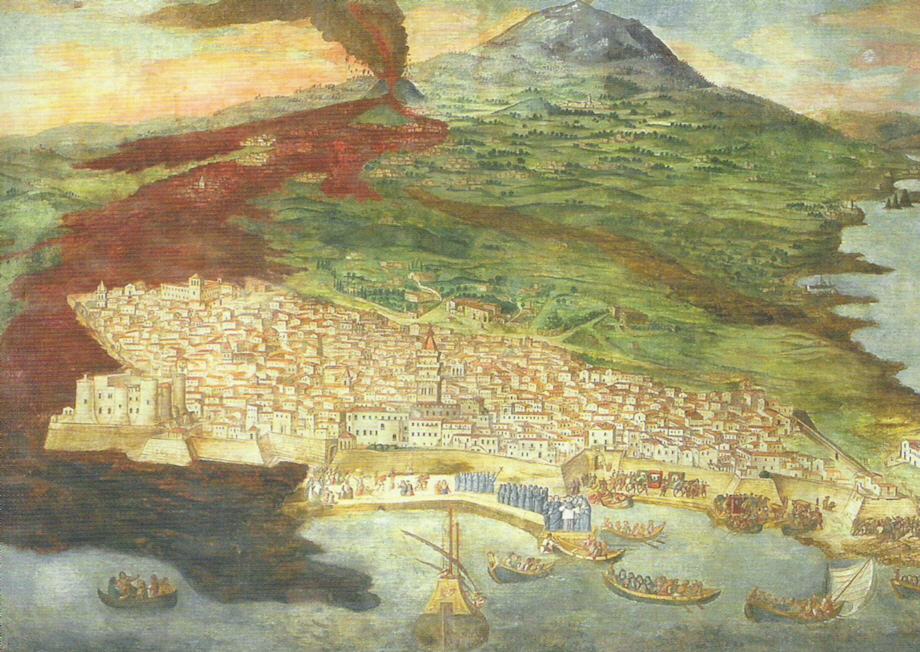
Etna occupies a special place in the Sicilian landscape because over time it modifies what surrounds it. Lava flows, ash, rocks, and new surfaces tell the story of an active mountain, while the towns on its slopes show the long coexistence between human activities and natural processes. There is no single image of the volcano: from a distance it may appear as a large, continuous profile; up close, one discovers bands of vegetation, lava fields, and stretches almost devoid of plants. This variety explains why a visit to Etna does not simply coincide with reaching a high elevation. The landscape changes already along the route and deserves attention at every stage.
Lava stone
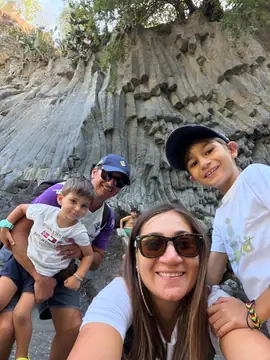
Lava stone is one of the most concrete links between the volcano and its communities. It has been used to build houses, roads, millstones, and even sculptures. In a town, a dark wall or a worked element tells of the daily use of a material born from geological events. Lava is therefore not only what one observes in a photograph of an eruption: once cooled, it becomes part of human works. This reuse does not erase the difficult relationship with an active volcano. Rather, it shows the ability of local populations to adapt the available resources and to continue living in a changing environment.
From lava flows to woodland
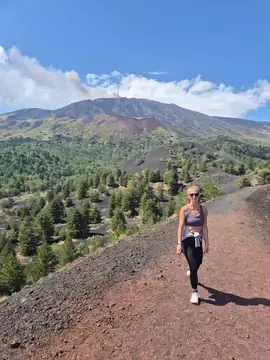
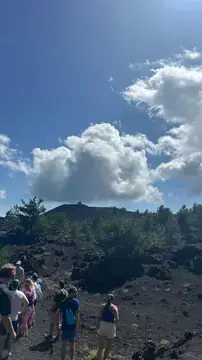
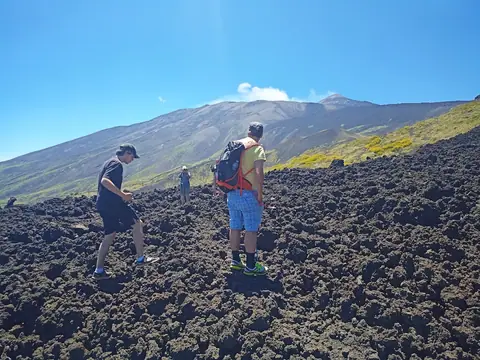
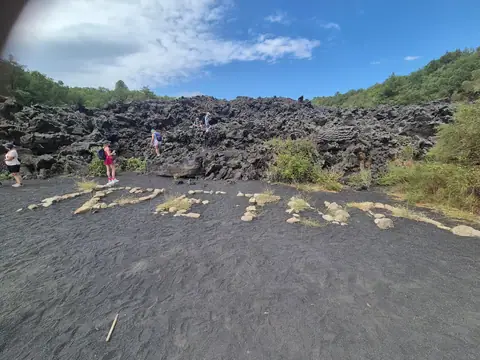
The territory protected by the Etna Park involves numerous municipalities and encompasses very diverse environments. At high elevations, near the most recent or exposed areas, the rock can appear almost bare. Certain lichens are among the first organisms to color it gray. Moving away from the eruptive vents and encountering less extreme conditions, patches of grasses such as Mediterranean fescue and Etna bluegrass appear. Lower down, soils and water availability allow the growth of other plant communities. This succession does not follow clear, unchanging lines: it depends on the history of the lava flows, the altitude, and the exposure of each slope. Two nearby surfaces can therefore have different geological ages and offer very different possibilities to plants.
To look at Etna's vegetation means to see the formation of a landscape. Where a lava flow has covered a terrain, plants must return to occupy a new and difficult surface. Where the rock is older and a soil has developed, the environment offers different opportunities. The contrast between these areas can be visible on the same itinerary. One does not need to know the name of every species to grasp the relationship; it is enough to observe how the color, density, and height of the plants change. If a panel or a guide helps to recognize lichens and grasses, the walk also becomes a reading of the time elapsed on the rocks.
Animals and caves
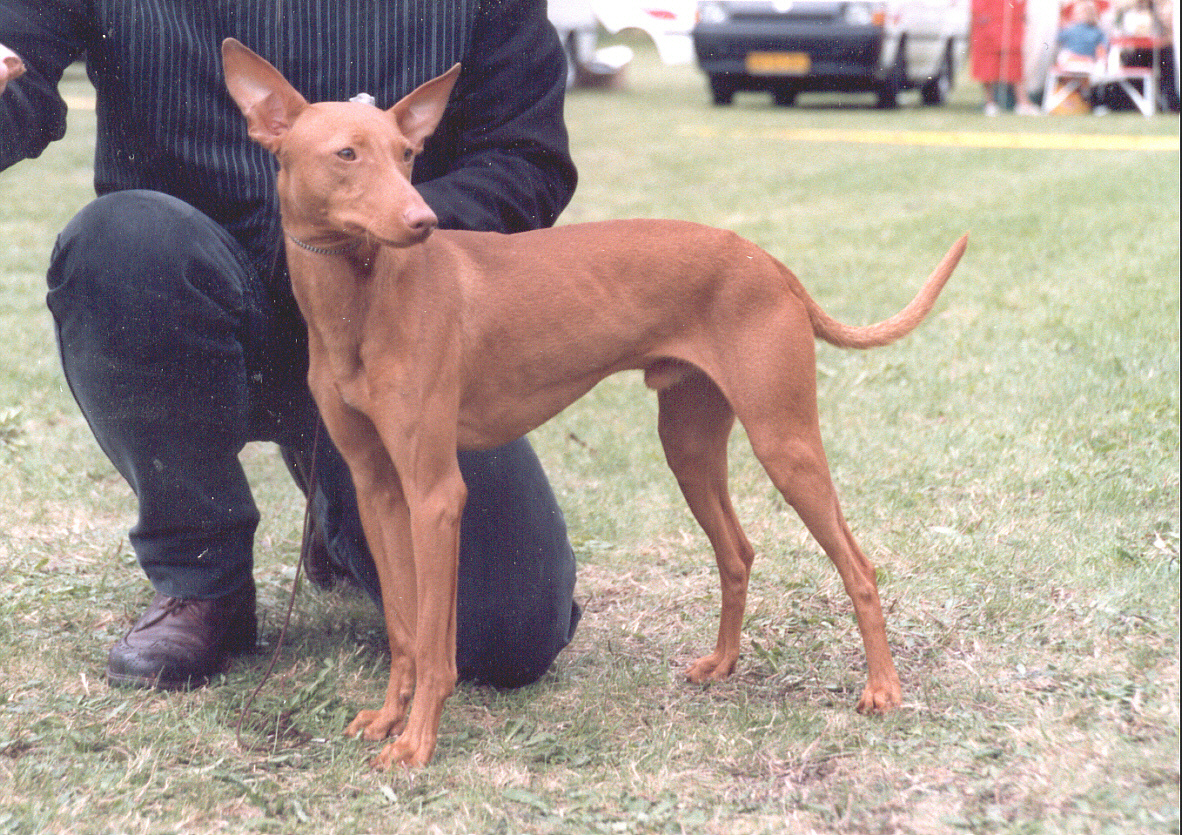
The animal world also changes from one band to another, following the availability of shelter and food. The Cirneco dell'Etna, a dog linked to the history of Sicilian communities, must be distinguished from the park's wildlife. Its name recalls a cultural relationship with the territory; the animals that live freely among woods and lava fields instead tell of the possibilities offered by the different habitats. An expanse of young lava, a slope covered with grasses, and a more mature forest do not support the same forms of life. Seeking out these differences makes a nature visit more precise than a simple hunt for sightings.
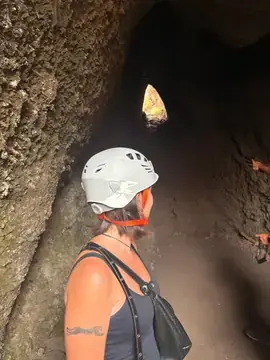
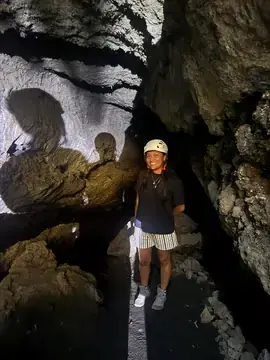
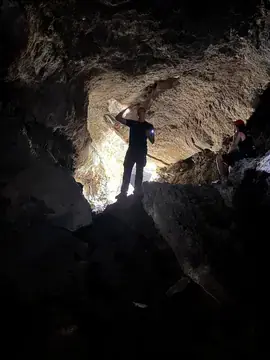
The Grotta del Gelo is an example of the variety within the volcano. It is a cavity associated with the presence of ice, located in a lava environment at over two thousand meters in elevation. Its name seems to contrast with the image of fire, but on the volcano different local conditions can coexist within a short distance. The route to reach it requires preparation and must be evaluated according to updated information. The cave also shows why Etna must be known through multiple stages: a lava field, a band of vegetation, and a cavity tell complementary aspects of the same mountain.
Living with the volcano
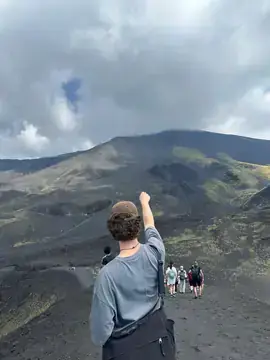
The volcano's activity demands practical attention. Weather, visibility, the condition of the trails, and regulations on accessible areas can change. A clear day at the start does not guarantee the same conditions higher up. For this reason, it makes sense to choose the itinerary based on one's own experience, consult the information provided by the managing authority, and rely on professionals when the route requires it. This is not about giving up discovery, but about giving it the right time and conditions. Even a short excursion, in a permitted and well-chosen area, can show the relationship between lava, vegetation, and the life of the towns.
Eruptions are the most visible moments of transformation, but their consequences continue over time. A cooled lava flow provides stone for buildings, changes a route, and offers the first lichens a surface to colonize; much later, where soil forms, other plants can establish themselves. On the same volcano, a cavity such as the Grotta del Gelo preserves still different conditions. Those who observe these passages understand why Etna cannot be summed up in a photograph of incandescent lava. The mountain is a collection of surfaces of different ages, of natural environments, and of towns that have learned to coexist with it. Each visit can follow one of these threads, as long as one observes it to the end.
Photo: Giacinto Platania (affresco); autore della riproduzione non indicato · Public domain · Wikimedia Commons