EN
EN Italiano
 Français
 Deutsch
 Polski
 Nederlands
 Español
 日本語
日本語 Čeština
 简体中文
简体中文 Русский
 Português
 한국어
한국어 Magyar
 Norsk
Norsk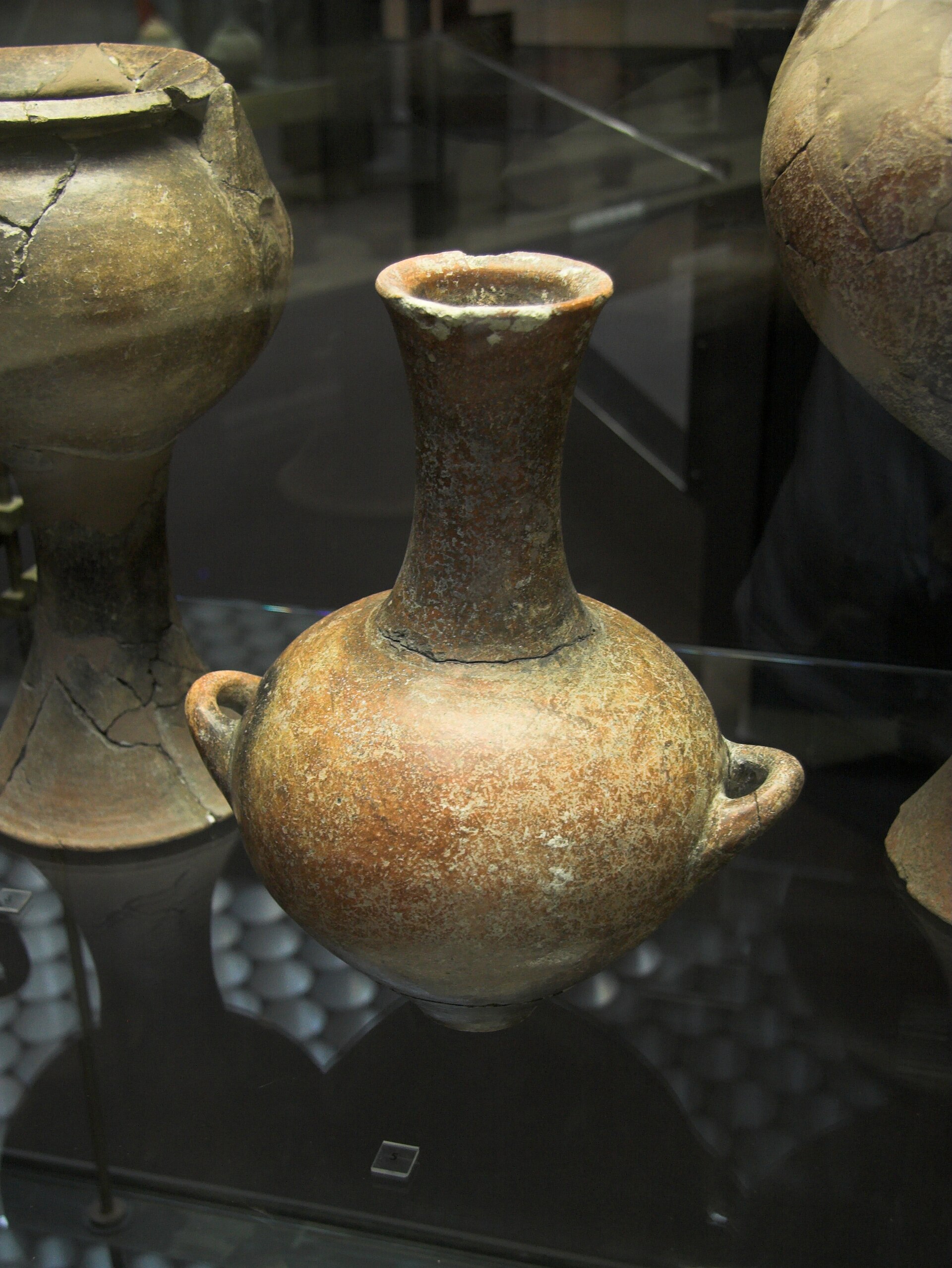
Before the Greek cities gave the island monumental temples and theaters, Sicily was inhabited by communities with their own histories, territories, and customs. The names Sicani, Siculi, and Elymians appear often when that period is recounted. It is easy to turn them into three neat labels, as if each group occupied a fixed area and possessed identical characteristics throughout. Material evidence and ancient sources suggest a more fluid scene: villages, necropolises, objects, contacts between the shores of the Mediterranean, and traditions handed down by ancient authors. To approach those populations, one must bring together what the ground preserves and what the writers of antiquity imagined or knew.
What the ancient sources tell
Thucydides is one of the ancient sources that transmit accounts of the origins of the island's populations. According to the tradition reported by the historian, the Sicani would have come from the Iberian peninsula, the Elymians would have been linked to the Trojans who fled after the war, while the Siculi would have had an Italic origin. These genealogies had cultural and political value for those who narrated them. Today it is more prudent to consider them testimonies of the way the ancients explained the variety of the island's populations. They are not enough, on their own, to reconstruct with precision the movements that took place many centuries earlier. Their importance remains: already in the Greek world it was recognized that Sicily did not have a single root.
The archaeological evidence
Archaeological traces allow us to go beyond the narratives of origin. The necropolis of Pantalica and the bronze artifacts preserved in museums offer concrete examples of these communities. The tombs carved into the rock speak of organized communities and of places meant to commemorate the dead. A small object, such as a bronze figurine, can tell of technical skills, a taste for form, and the circulation of ideas. It does not automatically indicate to which people its owner belonged: material cultures change, imitate one another, and travel. Precisely for this reason, museums and archaeological sites must be read together. The context in which a find was discovered is often as important as its beauty.
Even before Greek colonization, more substantial settlements took hold, with houses of wood and stone, villages, and transformations in pottery production. This information helps us imagine the daily life of indigenous communities: living in a stable place, working the land, raising animals, producing containers and tools, building tombs. The chronology is broad, and one should not think that every change occurred at the same moment across the entire island. Coasts, heights, and valleys offered different conditions. One community might have had intense relations with a landing place; another might have depended more on the inland territory. Ancient Sicily was a mosaic of environments even before it was a mosaic of names.
Among the testimonies of the Iron Age is Monte Finocchito, in the area of Noto. The mention of this site is useful because it shifts the gaze from the most celebrated centers toward places where the phases preceding and parallel to the arrival of the Greeks can be read. The necropolises, the dwelling structures, and the objects allow us to ask concrete questions: how were spaces organized? What activities sustained the community? What materials were used? The answers are not always complete. The work of archaeologists proceeds through fragments, comparisons, and new interpretations. This uncertainty does not diminish the value of the finds: it teaches us to distinguish what we know from what we reconstruct.
Phoenicians and Greek settlers
The Phoenicians, too, are part of the history of this period. Motya, Solunto, and Panormus were trading posts connected to the routes that crossed the western Mediterranean. Their presence reminds us that the island attracted navigators interested in routes and exchanges even before the Greek colonies occupied so much of the narrative. For the Sicani, Siculi, and Elymians, contact with merchants and new settlements was not necessarily the same everywhere. Relations could involve the exchange of objects and techniques, but also competition for land and landing places. To speak of "preceding" populations does not mean imagining them as isolated or frozen in time until someone else arrived.
Greek colonization made the relations between the coastal cities and the inland communities more visible in written sources. The new poleis sought fields to cultivate, transit routes, and allies; the inhabitants already present had their own interests in those same resources. From this could arise agreements, exchanges, or wars, depending on the place and the period. The story of Ducetius, a Sicel leader active many centuries after the first Greek foundations, makes clear that indigenous communities retained the capacity for political and military initiative. One should not, however, use his revolt as proof of an identical condition for all the Siculi or for all centuries: relations changed and were not the same in every part of the island. Precisely this variety prevents Sicani, Siculi, and Elymians from disappearing from the narrative as soon as the Greeks arrive.
Reading the sites today
For those visiting the island, this history changes the way one looks at places. Pantalica is not merely a landscape of tombs in the rock; an archaeological museum is not merely a collection of vases and bronzes. They are occasions to ask who inhabited Sicily before the most photographed monuments and how communities passed through phases of contact and transformation. The names Sicani, Siculi, and Elymians remain a starting point, not a definitive answer. Their legacy is best grasped by accepting the complexity of the sources, observing the finds in their context, and remembering that the identity of an island is also formed in its less visible stories.
Photo: Zde · CC BY-SA 4.0 · Wikimedia Commons