EN
 Italiano
 Français
 Deutsch
 Polski
 Nederlands
 Español
 日本語
 Čeština
 简体中文
 Русский
 Português
 한국어
 Magyar
 Norsk
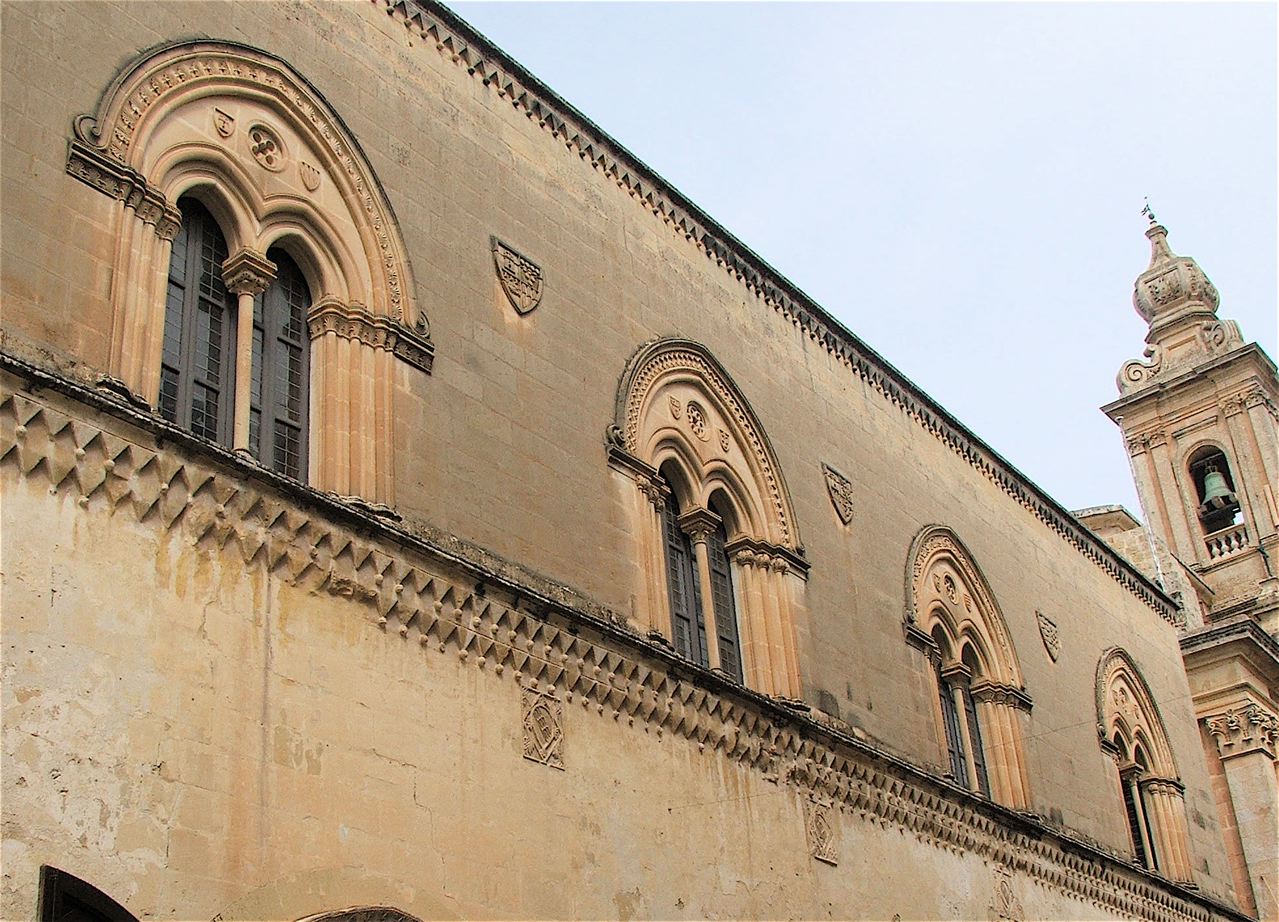
The Byzantine presence in Sicily belongs to a precise phase in the island's history, but its artistic legacy cannot be confined to a single date. The Byzantine era began with the conquest ordered by Emperor Justinian in 535. During that period, architecture followed construction models widespread throughout the rest of the empire. This is a useful starting point: the island was connected to a broader political and cultural world, and its religious buildings participated in a shared language. To grasp this, one must look beyond the often better-known image of the golden mosaics created in later centuries.
The first Byzantine basilicas
Among the examples from this phase are the basilica of Contrada Vigna a Mare, in the area of Santa Croce Camerina, and that of Santa Domenica at Castiglione. Both bear witness to the architecture of the Byzantine era. They are less immediately familiar names than the great cathedrals, but precisely for this reason they help change the scale of observation. A basilica does not merely tell of the choice of a style. It indicates that a community needed an organized space in which to gather, celebrate, and recognize itself. Its floor plan, its masonry, and its relationship with the territory are historical sources, even when the decorations have been lost or prove difficult to interpret. Comparing these sites also reminds us that the Byzantine legacy is not concentrated in a single city. Tracing it across different territories helps us understand how shared models took on different dimensions and relationships with the landscape. The distance between places is part of the story of their diffusion.
Observing these buildings means paying attention to what form allows us to reconstruct. One can try to understand where the entrance was, in which direction the main space developed, and how the area designated for celebration was set apart. If only parts of the structures remain, the gaps are not an obstacle to be ignored: they remind us how much of the ancient heritage has reached us incompletely. An archaeological visit often allows one to imagine dimensions and pathways rather than see an environment preserved in its entirety. It is a patient reading, different from the immediate impact of a church entirely covered in images.
Tombs in the latomiae
Testimonies from the period are not limited to buildings intended for liturgy. In the latomie of Palazzolo Acreide, Christian and Byzantine tombs are preserved, carved into a space marked by the activities of earlier eras. Here the interest lies not in the floor plan of a basilica, but in the way a community chose to use an already existing cavity for the memory of the dead. The case reveals another face of the material production linked to the Byzantine presence: burials, reuses, and adaptations, often less conspicuous than a monumental church. Placing the latomie alongside the basilicas allows us to distinguish the functions of places and to see how religious life was present both in spaces of worship and in funerary ones.
Byzantium in the Norman mosaics
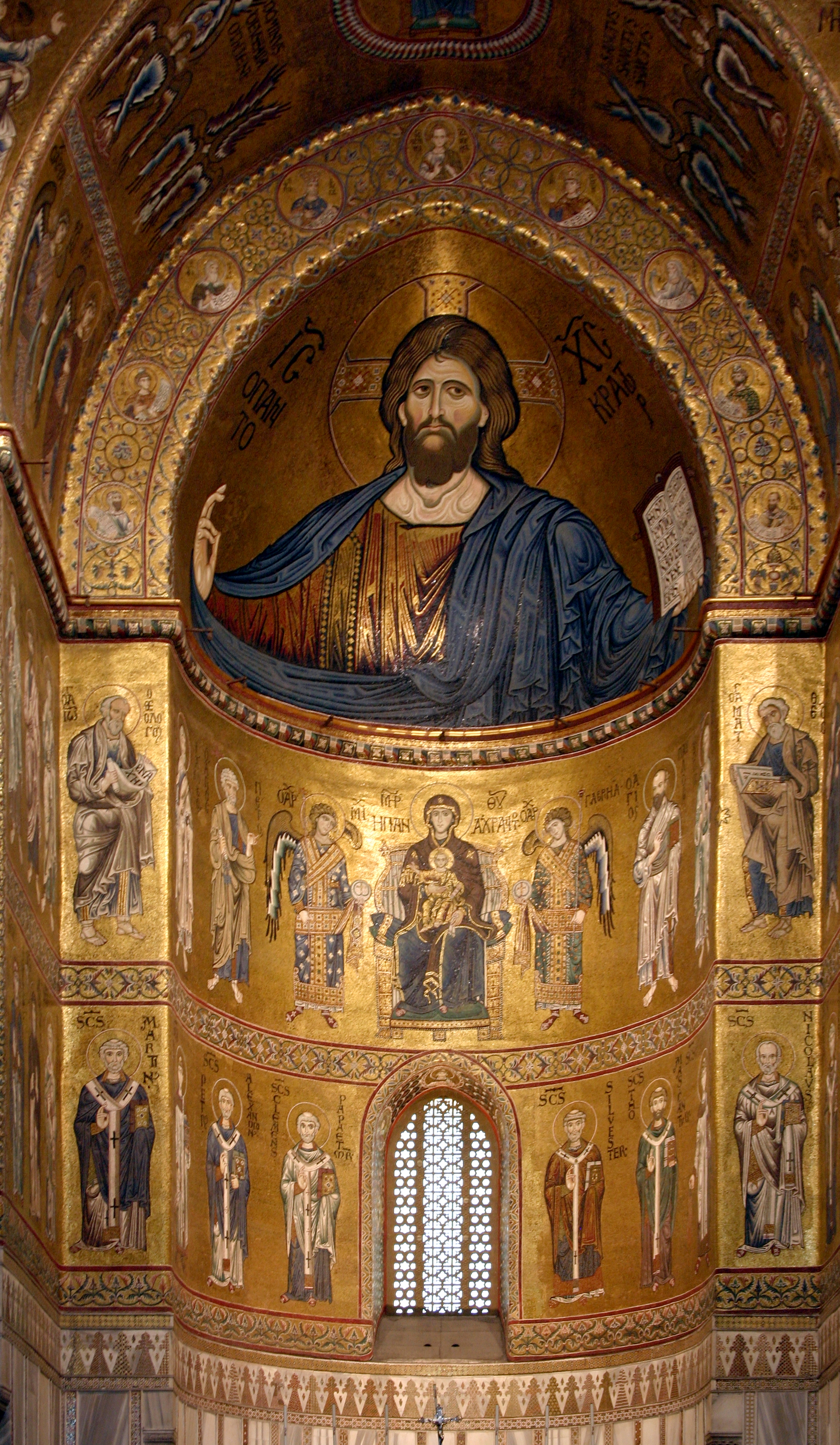
When speaking of Byzantine art on the island, however, one must distinguish the production that occurred during Byzantine rule from the later use of techniques and images linked to that tradition. This is shown by the mosaics of the Martorana and the Palatine Chapel, created in the Norman era. They are works from a different political phase, but their language maintains a strong relationship with Byzantine figurative culture. This distinction prevents placing in the same container objects separated by centuries and different circumstances. At the same time, it allows us to understand how artistic knowledge can continue to circulate and transform after the end of a political dominion.
In the mosaics of the Palatine Chapel and the Martorana, the Byzantine tradition is recognizable in the way sacred figures are organized and in their relationship with architectural space. It is not enough to say they shine with gold: the image placed on high guides the gaze and establishes a hierarchy different from that of the scenes arranged along the walls. The tesserae react to light and make the surfaces feel like part of the environment, not like paintings hung on a wall. The Palatine Chapel combines these images with other elements linked to the taste of the Norman court; in the Martorana, patronage and figurative choices can likewise be read. Both show an artistic tradition alive after the end of Byzantine rule, reworked for new religious and political needs.
A legacy to read phase by phase
The relationship with Byzantine culture thus does not come down to a list of monuments. It concerns the circulation of craftsmen, the persistence of ways of depicting the sacred, and the dialogue between the island and the eastern Mediterranean. For the visitor, the difference between a site from the age of Justinian and a mosaic from the Norman period can become the thread of an itinerary. One starts from the structures of the oldest basilicas and arrives at the luminous surfaces of medieval churches, seeking what changes and what remains recognizable. The two experiences do not replace each other: one explains the Byzantine historical presence, the other the long life of its figurative legacy.
This attention to phases makes the visit more honest and more interesting. A Sicilian church may display a Byzantine imprint without having been built under the Byzantine Empire; an ancient remnant may document that era without showing the mosaics we often associate with it. Asking when a structure was built, who commissioned it, and how it changed over time helps avoid confusing styles and governments. Byzantine art in Sicily thus emerges as a story of presence and transmission: buildings of the sixth century, models shared with other Mediterranean lands, and images that continued to speak to the island's communities much later.
Photo: KNOW MALTA by Peter Grima · CC BY-SA 2.0 · Wikimedia Commons