EN
EN Italiano
 Français
 Deutsch
 Polski
 Nederlands
 Español
 日本語
日本語 Čeština
 简体中文
简体中文 Русский
 Português
 한국어
한국어 Magyar
 Norsk
Norsk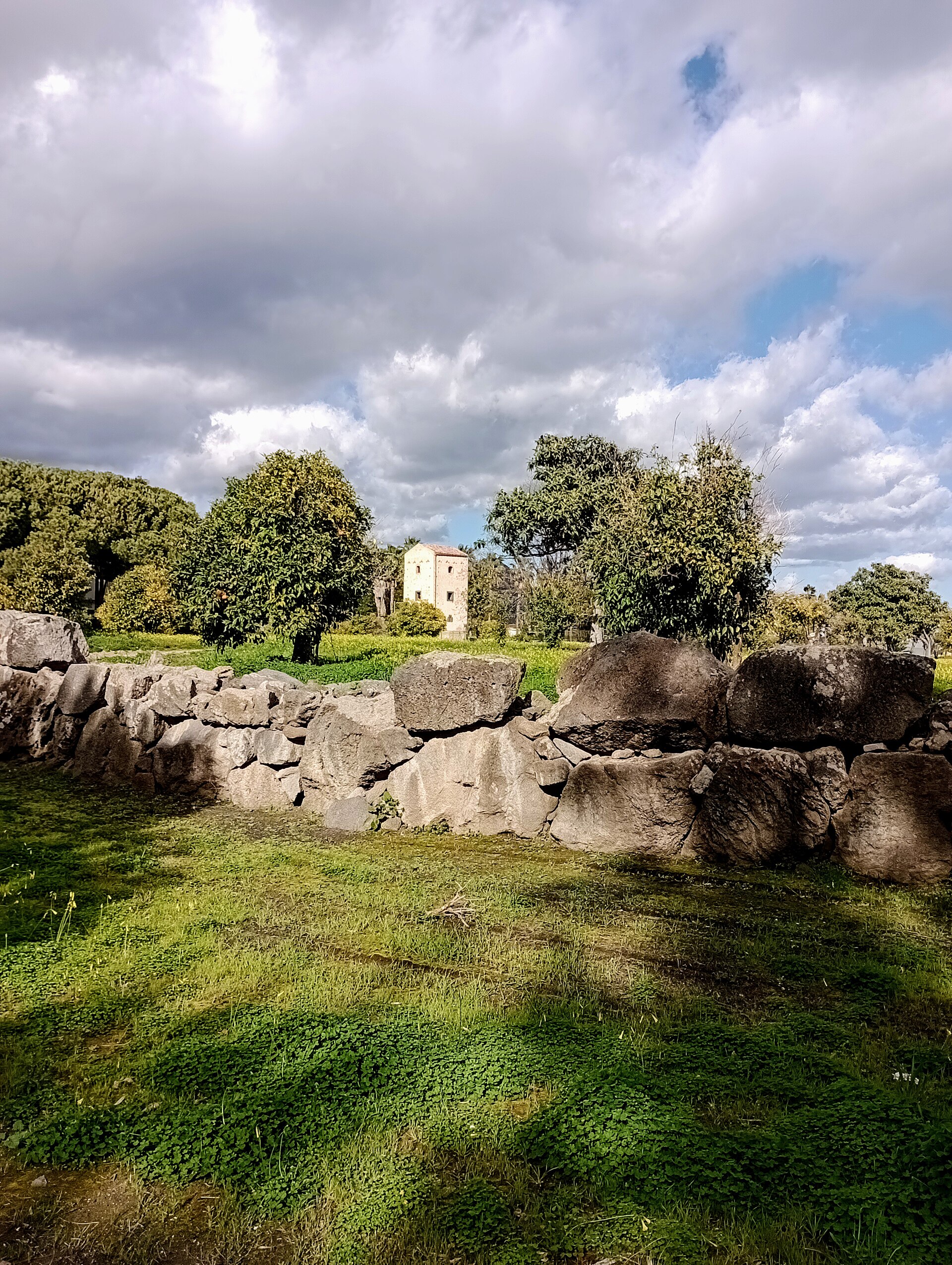
The Greek colonization of Sicily began in the eighth century BC and changed the distribution of settlements along the coasts. The Greeks looked to the island for its anchorages, its cultivable land, and the opportunity to take part in the routes that linked the eastern Mediterranean to Italy. It was not a single landing organized by one city: different groups founded centers in different places and at different times. Each new settlement had to secure water, fields, communication routes, and relations with the populations already present. Speaking of a "Greek Sicily" is therefore useful as a summary, provided it does not erase the variety of these foundations and of the responses they encountered in the neighboring territories.
Mother cities and founders
Each Greek colony had a mother city, a leader of the expedition, and a settlement plan. The city of origin provided a political, religious, and cultural reference; the new community, however, had to adapt to a concrete territory, with harbors, waterways, heights, and populations already present. The choice of location had lasting consequences. A useful anchorage could favor trade, while fertile land sustained the city's growth. The foundation was not merely a symbolic gesture: it entailed the division of spaces, the construction of dwellings, the organization of cults, and the definition of relations with the hinterland.
According to the tradition reported by Thucydides, Naxos was the first Greek colony on the island, founded by Chalcidian groups. Megara Hyblaea, Syracuse, Gela, and Catania followed. Syracuse is linked to the Corinthians, Megara Hyblaea to the Megarians. In turn, some Sicilian cities contributed to the birth of new centers: Gela played a role in the founding of Agrigento and Megara Hyblaea in that of Selinunte. This succession shows how the network of cities grew through offshoots. A colony did not necessarily remain a dependent outpost: it could become a center capable of promoting other settlements and competing with older cities.
Greek towns, cults and traditions
The Greek presence is still visible in the forms of the city. The agora was the main square of the Greek city, close to the buildings of public life and to religious sites. Temples and colonnades gave a recognizable physiognomy to collective spaces. Theater, necropolis, and fortification systems also belonged to an urban organization that combined practical needs and the representation of power. Visiting an archaeological site means trying to read these relationships, not merely photographing an isolated column. A temple, for example, takes on another meaning when placed in relation to the streets, the walls, and the agricultural territory that sustained the community.
The foundations introduced the Greek language, deities, funerary rites, and artistic traditions. Between the sixth and fifth centuries BC, eastern Sicily showed a strong diffusion of Greek language and culture. But the spread of a culture does not equate to the immediate disappearance of those that preceded it. Sicans, Sicels, and Elymians continued to live on the island and to interact with the new cities. Some contacts favored the circulation of objects and practices; others produced friction. The history of a coastal settlement must therefore be read together with that of the countryside and the communities of the interior. Only thus can one understand why the growth of the colonies brought prosperity and, at the same time, political tensions.
Phoenicians, trade and culture
Sicily also attracted the Phoenicians, present in places such as Motya, Solunto, and Panormus. The Phoenicians played an important role in the commercial exchanges that linked the island to other shores of the Mediterranean. The proximity of multiple maritime networks made the island a Mediterranean hub, but also made competition for routes and territories possible. In the following centuries, the confrontation between Greek cities and Carthage would become a decisive theme. At the outset, however, geography offers the simplest key: whoever controlled Sicilian anchorages could take part in the traffic that crossed the sea. Greek colonization inserted itself into an environment already traveled by navigators and merchants.
The expansion of the cities was accompanied by the production of artifacts and an intense cultural life. Greek vases preserved in the museums of Caltanissetta, Agrigento, and Lipari, together with the excavations of Megara Hyblaea, offer concrete traces of this presence. These objects are useful because they add the everyday scale to that of monuments. A vase recalls the work of those who made it and the use a community made of it; an excavated site allows one to observe the arrangement of spaces, even when the structures survive only in part. Archaeology holds together artistic forms and ordinary gestures, indispensable for understanding what it meant to inhabit a polis.
The great cities and the others
Syracuse, Agrigento, and Selinunte became powerful cities and left particularly well-known testimonies. Their fame can lead one to regard the other foundations as mere minor stages. It is worthwhile, instead, to follow the entire network, from the earliest cities to the subsequent foundations. The Sicilian archaeological landscape tells a story of choices, transformations, and relations between communities. Greek colonization was not only the origin of spectacular temples: it changed the distribution of settlements, politics, and language, opening a season that would mark the island in the following centuries as well. Each site preserves a different fragment of this common story. Relating cities and countryside helps one understand also who materially sustained their growth. Behind the solemn architecture were fields, artisans, transport, and daily relations with the surrounding territory.
Photo: Jeanne Griffin · CC BY-SA 4.0 · Wikimedia Commons