EN
EN Italiano
 Français
 Deutsch
 Polski
 Nederlands
 Español
 日本語
日本語 Čeština
 简体中文
简体中文 Русский
 Português
 한국어
한국어 Magyar
 Norsk
Norsk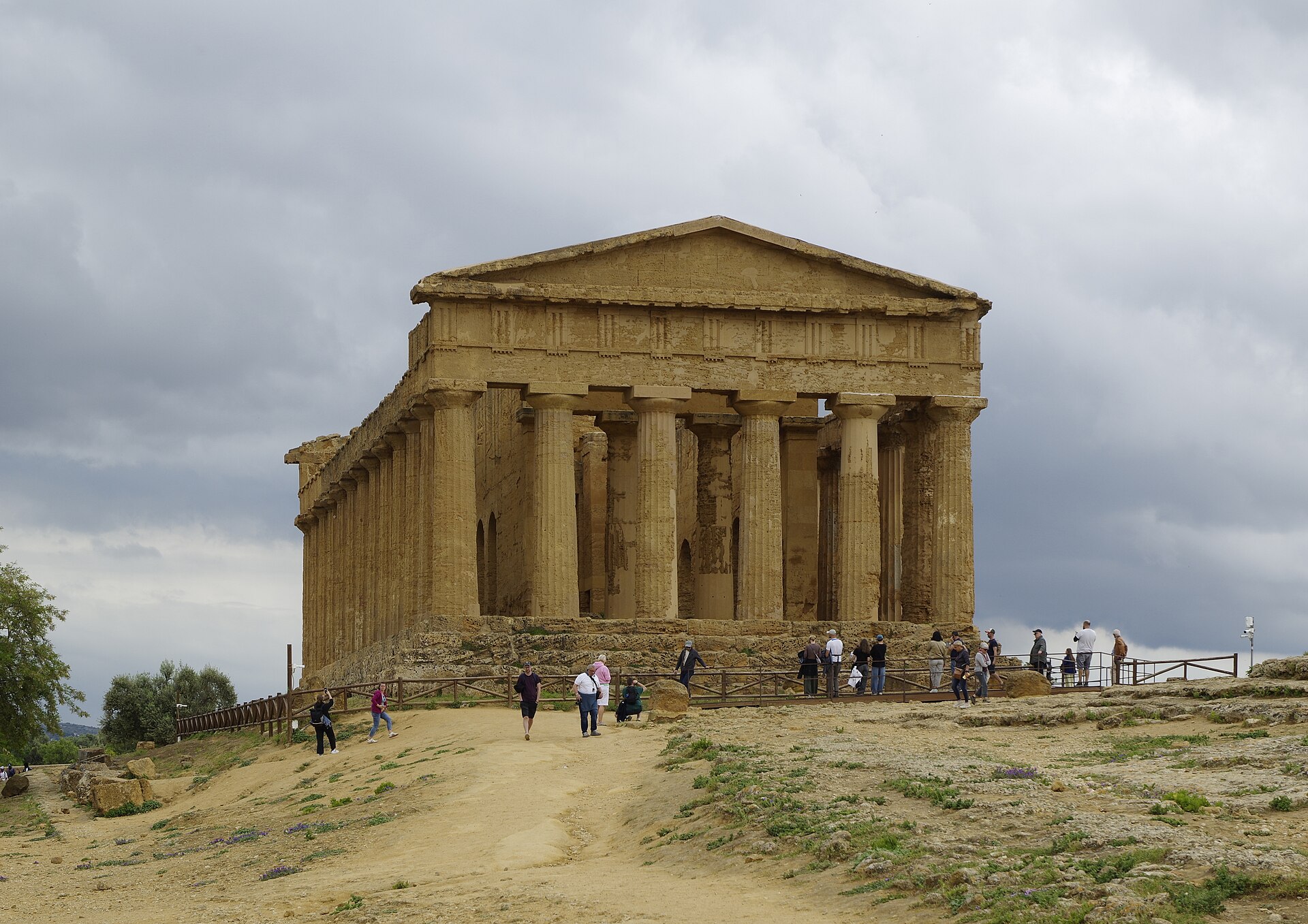
Naxos, Megara Hyblaea, Syracuse, Gela, Agrigento, and Selinunte shared a language and many religious practices, but they did not have the same history. Some were born directly from expeditions that set out from Greece; others were founded by Greek cities already established on the island. Location influenced their development: a port opened trade routes, a plain guaranteed harvests, a height favored defense. The cities also competed for fields, resources, and alliances, building different relationships with the communities of the interior. A journey among their remains makes sense precisely if it shows these differences, instead of using a temple or a theater as an image valid for all of them. The ruins preserve traces of decisions made by distinct communities, often in conflict with one another.
Naxos, the first foundation
Naxos appears in ancient tradition as the first Greek foundation on the island. It is a significant starting point because it tells of the arrival of groups seeking a new home on Mediterranean routes. Megara Hyblaea represents another stage in this diffusion. Excavations of the colony help give concrete shape to the account of the earliest foundations, beyond the mere names handed down by the sources. Looking at an archaeological area like this one helps move beyond the image of the ancient city made up only of monumental buildings. Traces of city blocks, dwellings, and common spaces show that urban life consisted above all of daily activities and relationships among people.
Syracuse and Gela
Syracuse occupies a central place in the history of the Greek cities of Sicily. Founded by Corinthians, it became a rich and powerful polis of the Western Greek world, capable of attracting the attention of very distant adversaries. The Greek theater and the Fonte Aretusa offer two different ways of reading the city and its relationship with public life and with water. The theater recalls performances and public life; the spring links the urban landscape to water and to literary memory. The vestiges do not tell of an immobile city: Syracuse went through different governments, wars, expansions, and transformations that continued after the end of Greek autonomy.
Gela played an important role in the network of foundations. Its relationship with the birth of Agrigento shows how a Sicilian settlement could in turn promote another city. The public baths of Gela, dated to the Hellenistic period, remind us that the history of the polis did not end at the moment of its founding. Spaces changed with collective needs and with the passage of centuries. The ceramic finds uncovered or preserved in museums also help us follow these phases. They speak of uses, techniques, and contacts that do not always emerge from the account of great battles.
Agrigento and Selinunte
At Agrigento, the columns of the Temple of Heracles and the other buildings of the Valley of the Temples make visible the religious and monumental dimension of the city. The placement of the sacred buildings in the landscape reveals the city's ambition. A row of columns was not conceived as an isolated object: it was part of a system of cults, routes, inhabited places, and productive territories. The visible remains show what has survived, but they also invite us to imagine the buildings and spaces that have not come down to us. For this reason an archaeological itinerary can be more instructive if it alternates temples with museums, where smaller materials restore less solemn aspects of city life.
Selinunte, founded in connection with Megara Hyblaea, shows another scale of Greek presence. The acropolis and the temples give a sense of a city that sought to make its power visible. Its relationship with the western coast, however, placed it in a zone of competition. Conflicts with Carthage and requests for alliance from certain colonies shaped the balances of Greek Sicily. The Greek city was therefore also a political subject, committed to defending its interests and choosing its interlocutors. The monumental ruins are the material result of those ambitions, but they must not obscure the fragility of the balances that surrounded them.
What they had in common
The cities shared a language, deities, burial rites, and organization around the agora, while preserving important differences. Government buildings and temples faced onto public spaces; colonnades made the architecture recognizable. These similarities did not erase the differences. Syracuse, Agrigento, and Selinunte experienced political situations of their own, and relations with the Sicani, Siculi, and Elymians varied from place to place. The account of discontent among the indigenous populations reminds us that the urban order of the colonies could rest on exclusions. To understand a polis means also observing who could participate in its decisions and who remained outside them.
To visit the Greek cities of Sicily, it is useful to connect several sites without expecting one to represent all the others. The theater of Syracuse, the excavations of Megara Hyblaea, the remains of Gela, the temples of Agrigento and Selinunte answer different questions. In one place the spaces of civic life emerge, in another the sacred architectures, elsewhere the network of foundations. The landscape always offers part of the explanation: sea, plains, and heights are not mere backdrops to the ruins. They were conditions against which the inhabitants measured every choice. Read together, these sites restore the variety of the Greek Sicilian world. A museum, too, can complete the reading, because it brings back to light the scale of the objects transported, used, and deposited. The combination of site and find avoids reducing each city to its most famous image.
Photo: Berthold Werner · CC BY-SA 4.0 · Wikimedia Commons