EN
EN Italiano
 Français
 Deutsch
 Polski
 Nederlands
 Español
 日本語
日本語 Čeština
 简体中文
简体中文 Русский
 Português
 한국어
한국어 Magyar
 Norsk
Norsk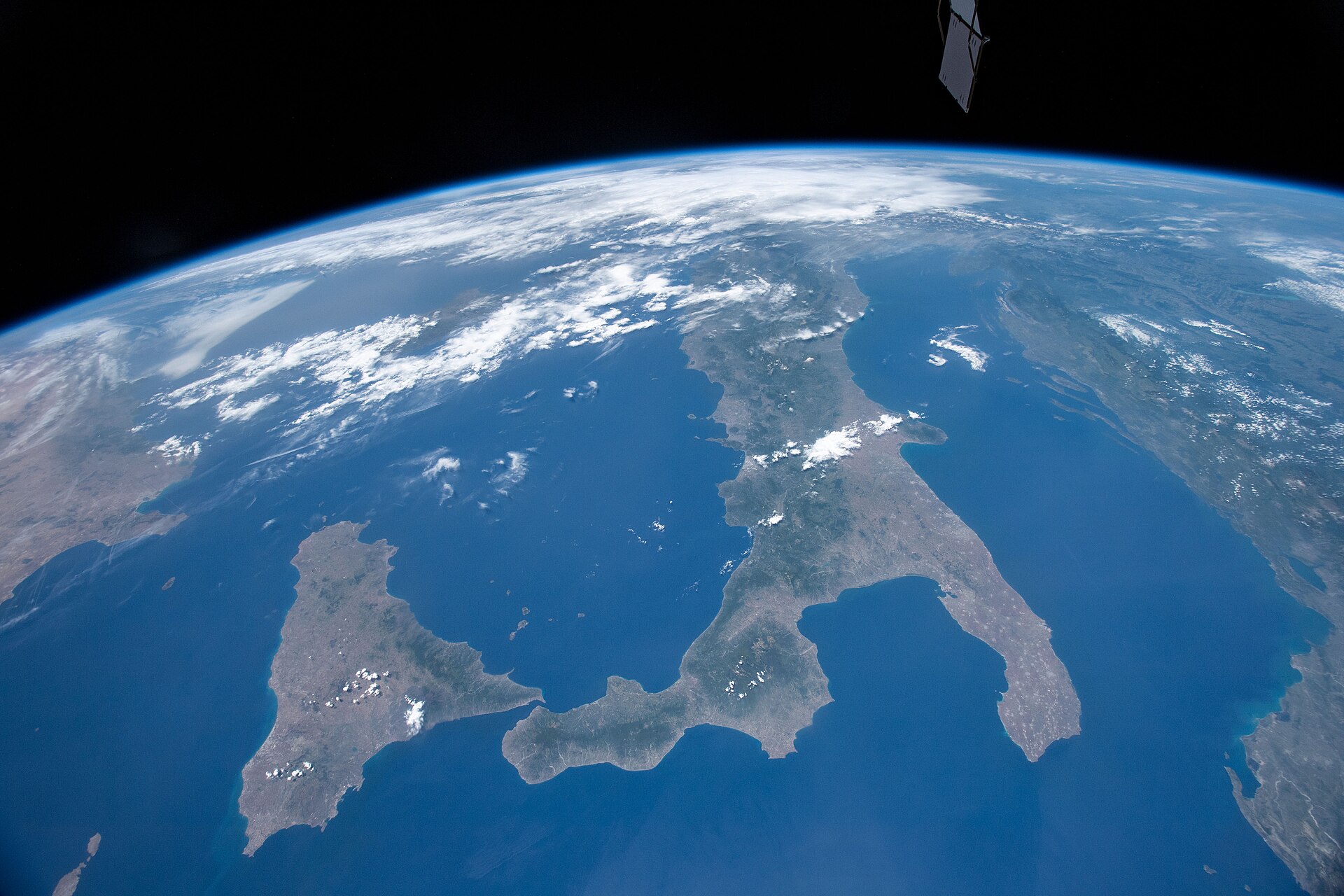
Looking at Sicily on a map immediately reveals why so many peoples sought to reach it. The island lies between the eastern and western shores of the Mediterranean, close to the Italian peninsula and open toward Africa. Its three vertices trace a recognizable shape: the ancient Greeks called it Trinacria, while the Romans also used the name Triqueta. The cape near Messina, the one in the Marsala area, and Capo Passero ideally delimit its profile. The head with three legs arranged in a radial pattern, which appears in Sicilian iconography, sums up this geography. It is an effective symbol, but the island's history is far more complex than a single figure: it tells of encounters, conflicts, and transformations involving both the sea and the interior.
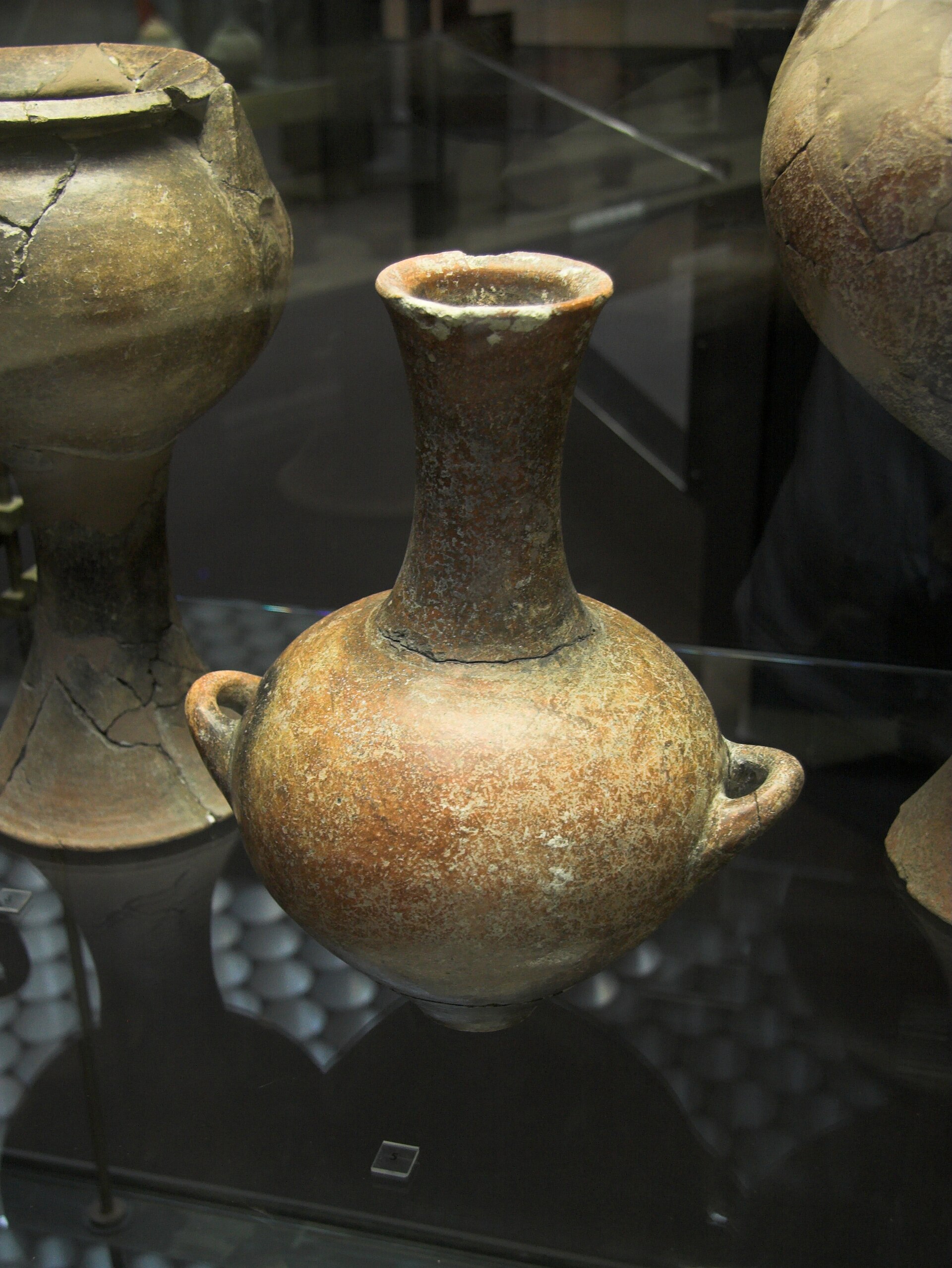
The oldest evidence long predates the famous cities. The Grotta di San Teodoro, in the Messina area, and those of the Addaura and Levanzo date back to different moments of prehistoric human presence. In the Grotta del Genovese, on Levanzo, the engravings show figures traced on the rock many thousands of years ago. The finds from Stentinello, San Cono, and Villafrati belong instead to other phases of settlement and also speak of daily activities. They are not merely the prologue to the Greek temples: each site documents communities that used different resources and left traces of techniques, choices, and social relations. Placing them side by side without confusing their dates allows us to see how long the island's history already was before the colonies.
With the Bronze Age came villages, agricultural activities, and animal husbandry. The Castelluccio and Thapsos cultures, dwellings of wood and stone, pottery, and tombs carved into the rock show further passages in this long history. The necropolis of Pantalica makes visible the weight that the relationship with the dead held in collective life. In these places one does not read merely a succession of objects. One can observe shared choices: where to live, how to organize space, what forms to give to artifacts, and how to remember those who were no longer there. Even then, Sicily was traversed by relations with neighboring territories.
Before the arrival of the Greek colonists, ancient sources recall the Sicani, the Siculi, and the Elymians. The historian Thucydides handed down accounts of their origins, linking them to the Iberian peninsula, to Italy, and to the Trojan tradition. Those narratives should be read as explanations elaborated in the ancient world, not as photographs of a migration. They remain precious, however, because they show that Sicily was perceived as a land of diverse peoples. Iron Age sites, necropolises, and objects preserved in museums allow us to approach that plurality without reducing it to three names. The Phoenicians also reached the island: Mozia, Solunto, and Panormo were important points for commercial connections.
From the eighth century BC, Greek foundations profoundly modified the coastal landscape. Naxos, Megara Hyblaea, Syracuse, Gela, Catania, Agrigento, and Selinunte were important centers of Greek presence, each with its own relationship to the coast and the interior. Every settlement had ties to a city of origin and was situated within a system of routes, anchorages, and agricultural territories. The new communities brought language, cults, urban forms, and customs. Temples, theaters, and artifacts displayed in museums preserve imposing traces of them. Greek presence, however, did not immediately erase the populations already settled on the island: coexistence and conflict alternated, while the cities grew and sought to control the surrounding resources.
The wealth of the Greek cities attracted rivals and fueled internal struggles. The historical sequence runs from the great foundations to the age of the tyrants, from the Battle of Himera to the wars between Syracuse and Carthage, up to the Athenian expedition against Syracuse. In these events the island appears as a center of Mediterranean politics, not as a periphery. The position that made commerce and exchange possible also made control of the ports strategic. Syracuse became a power, but it had to defend itself, fortify itself, and face phases of instability. The Greek theater, the Fonte Aretusa, and the archaeological remains today recall a city that was at once a place of culture and a stage for military contests.
The arrival of Rome opened another phase. Sicily became the first Roman province, and its fertile lands were essential for the grain supply. The mosaic of the Villa Romana del Casale, the amphitheaters of Catania and Syracuse, and other finds allow us to distinguish Roman presence from Greek in the cities and places of daily life. Roads, agricultural estates, and trade inserted the island into a wider system. The change also had costs: taxation, concentration of land, loss of power for local assemblies, and slave revolts. To understand Roman Sicily one must hold together the works that remain and the social tensions recounted by the sources.
In the following centuries came new powers and new religious expressions. The spread of Christianity, the events of the Byzantine era, the Arab conquest, and the arrival of the Normans changed the island yet again. Palermo assumed a central role during Muslim rule; agriculture, irrigation, and trade received lasting impulses from it. The Norman season gathered Latin, Greek, and Arab legacies into a single kingdom. Later, Frederick II, the Sicilian Vespers, and the successive dominations added further chapters. Churches, palaces, and neighborhoods tell of these phases even when they have been reworked. Walking in Sicily therefore means traversing layers of history: none of them alone suffices to explain the island, but each helps to read the others.
Photo: NASA · Public domain · Wikimedia Commons