EN
 Italiano
 Français
 Deutsch
 Polski
 Nederlands
 Español
 日本語
 Čeština
 简体中文
 Русский
 Português
 한국어
 Magyar
 Norsk
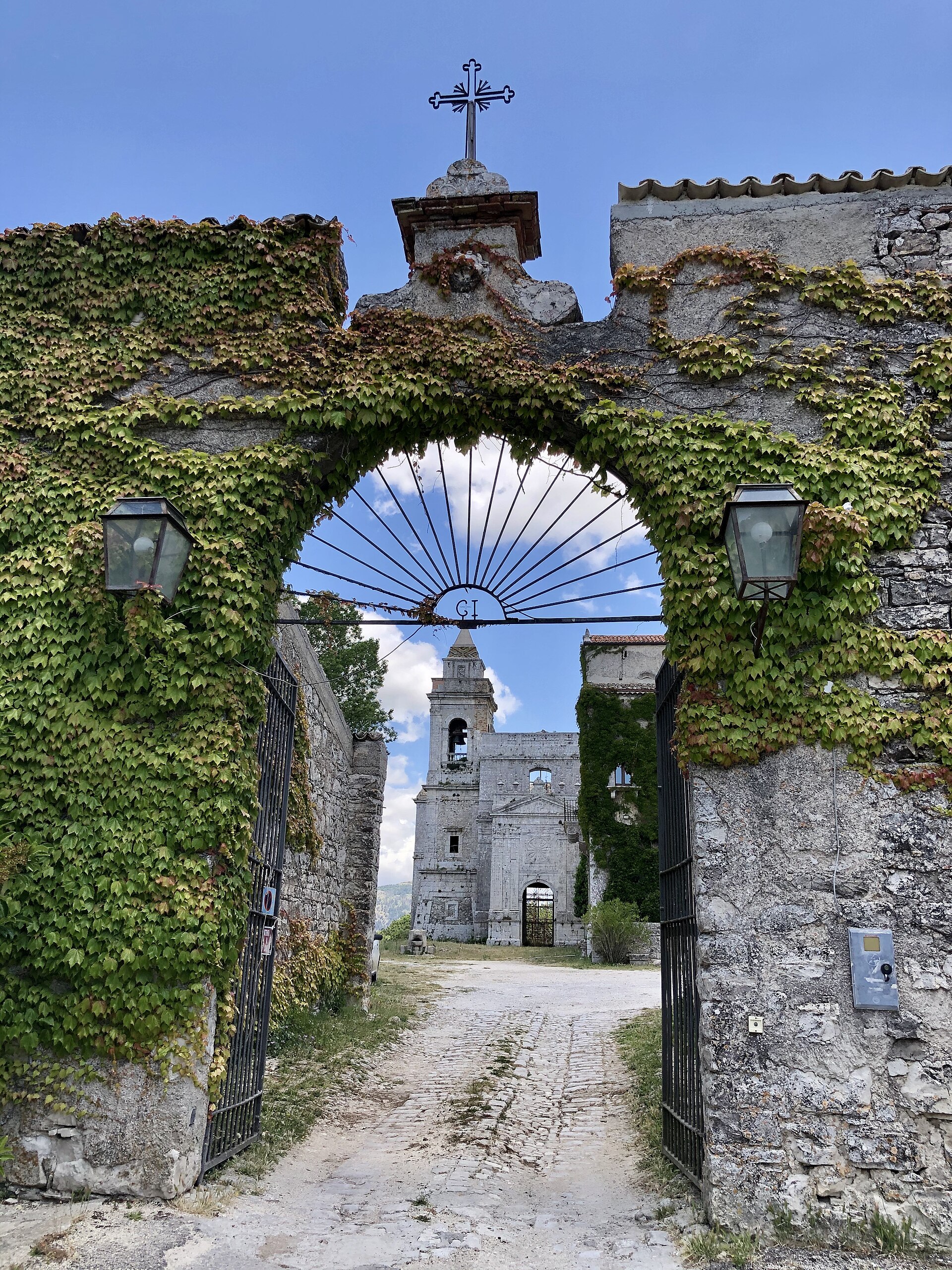
The monasteries of Sicily help us read a part of the island's history that often remains in the background of the great political narratives. They were complexes intended for the life of religious communities and, for this reason, brought together different spaces. The church was important, but it did not exhaust the building: the cloister, the common areas, and the passages between the various parts responded to everyday needs. To look at a monastery only from its facade means losing the relationship between worship, the organization of time, and architectural form. Their architecture is linked to the spread of Romanesque models during the Norman period.
The Benedictines and the Montecassino models
The Benedictines played a notable role in the construction of cloisters and convents. Their layouts drew on models inspired by the French abbey of Cluny, already circulating in southern Italy. This reference should not be understood as an identical copy from one place to another. A model could guide the general layout, while the terrain, the available materials, and the size of the community required adaptations. It is precisely this tension between a shared schema and a local solution that makes visiting different complexes so interesting. One can look for similarities in the way the church and cloister are connected, and differences in scale or in the treatment of surfaces.
Another important influence is that of Montecassino on the ground plans of the cathedrals of Messina and Monreale. This fact extends the discussion beyond buildings explicitly called "monastery" or "abbey." A cathedral could be connected to a religious community and to design traditions that circulated through monasteries. For the visitor, this means that the words in the title and those on the signs are not enough to explain the architecture. One must ask which model guided the arrangement of spaces and how that model was transformed on site. The influence of Montecassino and that of Cluny are not two decorations to be recognized at a glance: they concern the way the building was conceived.
Monreale, cathedral and cloister
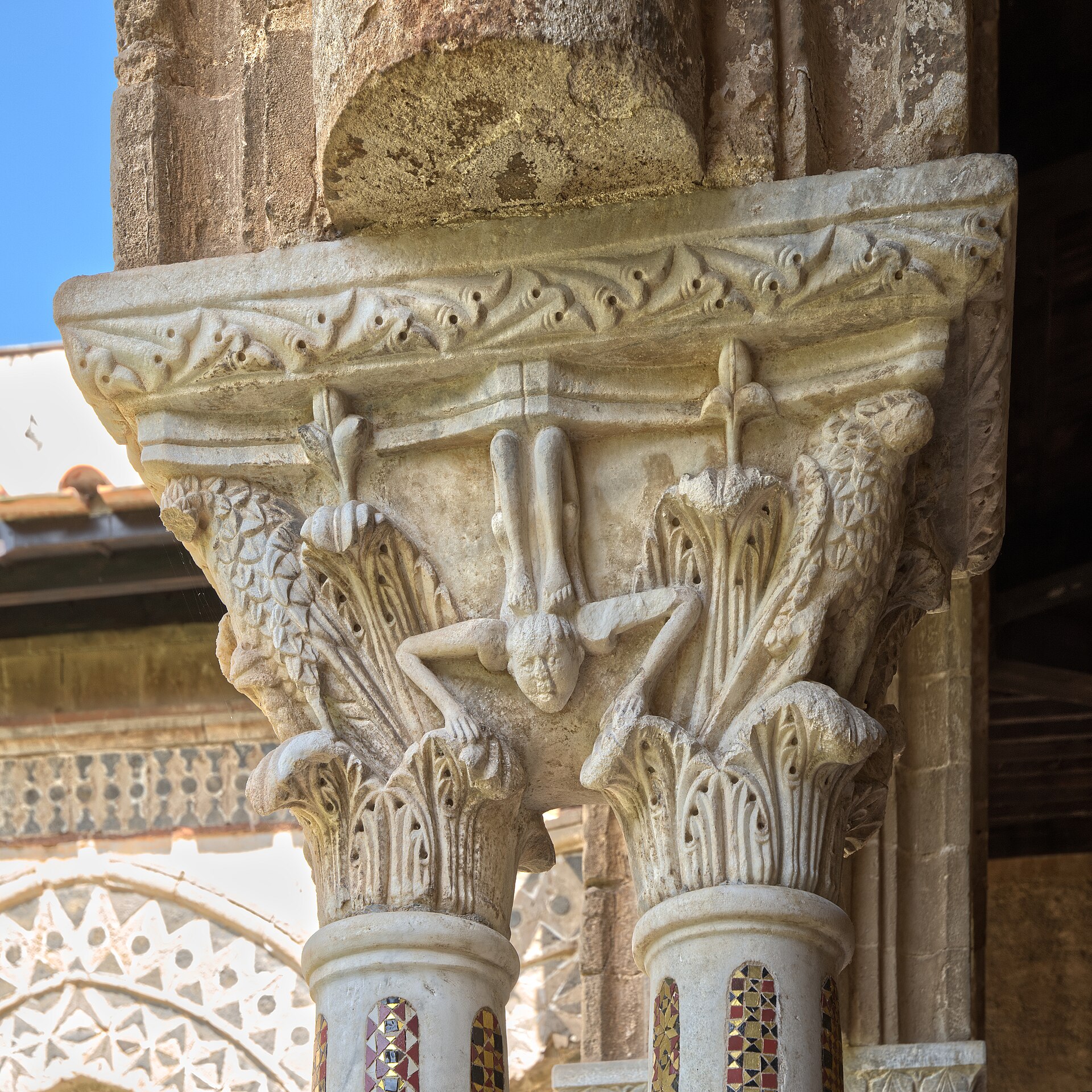
Monreale offers one of the most immediate images of this relationship. The cathedral is flanked by the cloister of the adjoining Benedictine convent. The two parts invite a change in the rhythm of observation. The cathedral is a great liturgical space, also designed to be seen and walked through by people outside the monastic community. The cloister suggests a more contained, repeated circulation, tied to internal life. To move ideally from one to the other means understanding that a religious complex was not made up of isolated spaces, but of routes that assigned each space a function and a different degree of accessibility.
From Sciacca to Lipari
The monastery of Giummare at Sciacca, dating from the twelfth century, and the portal of the former Benedictine monastery of San Nicolò l'Arena recall the variety of conditions in which these places have come down to us. Sometimes a fairly legible ensemble survives; elsewhere a single portal introduces a more complex architectural history, made up of transformations or losses. A fragment does not tell the story of the entire complex, but it can preserve information about materials, the main entrance, and the language chosen by those who built or modified the building. It must be read carefully, avoiding the temptation to treat it automatically as evidence of an unchanged original feature. The difference between a complex and a fragment also changes the questions we can ask: in the former one reads the relationships between spaces, in the latter above all the quality of a passage or a decoration. Both, in any case, belong to the history of monastic presence.
The cloister of San Bartolomeo at Lipari, linked to Norman architecture, offers yet another perspective. Its location on an island allows us to think about the spread of religious models across the sea. Monastic communities were not a closed and immobile world: they received architectural forms and knowledge that arrived from other centers and adapted them to the places where they lived. This helps us understand why Sicilian heritage shows similarities with works from southern Italy and, at the same time, presents solutions of its own. The routes traveled by people, materials, and ideas leave visible traces even in a cloister.
The cloister of Monreale makes visible the scale a monastery could assume beside a great Norman cathedral. Its square layout and its 228 columns form a succession of covered passages around the central space. Those who walked through it could move among the community's spaces without entering the church each time. The repeated order of the columns gives measure to the route, while the open space brings light and air into the life of the complex. This architectural detail helps us imagine the cloister as part of daily organization, not as an ornament added to the cathedral. It is a concrete difference from the isolated portal of a former monastery, which preserves only the trace of an entrance.
San Martino delle Scale
The Benedictine abbey of San Martino delle Scale, on the heights near Palermo, shows a duration different from that of the Norman building sites alone. The complex was rebuilt and expanded in several phases: courtyards and cloisters stand alongside a single-nave church and still later interventions. Its history allows us to follow a religious community that modified its buildings while continuing to use them. An ancient cloister, a sixteenth-century church, and later additions should not be attributed to the same campaign of works. Reading them in sequence explains why monasteries and abbeys are often more complex than a single monument: their layout adapted to new needs without losing its function as a shared place for prayer, study, and daily life.
Photo: Davide Mauro · CC BY-SA 4.0 · Wikimedia Commons