EN
 Italiano
 Français
 Deutsch
 Polski
 Nederlands
 Español
 日本語
 Čeština
 简体中文
 Русский
 Português
 한국어
 Magyar
 Norsk
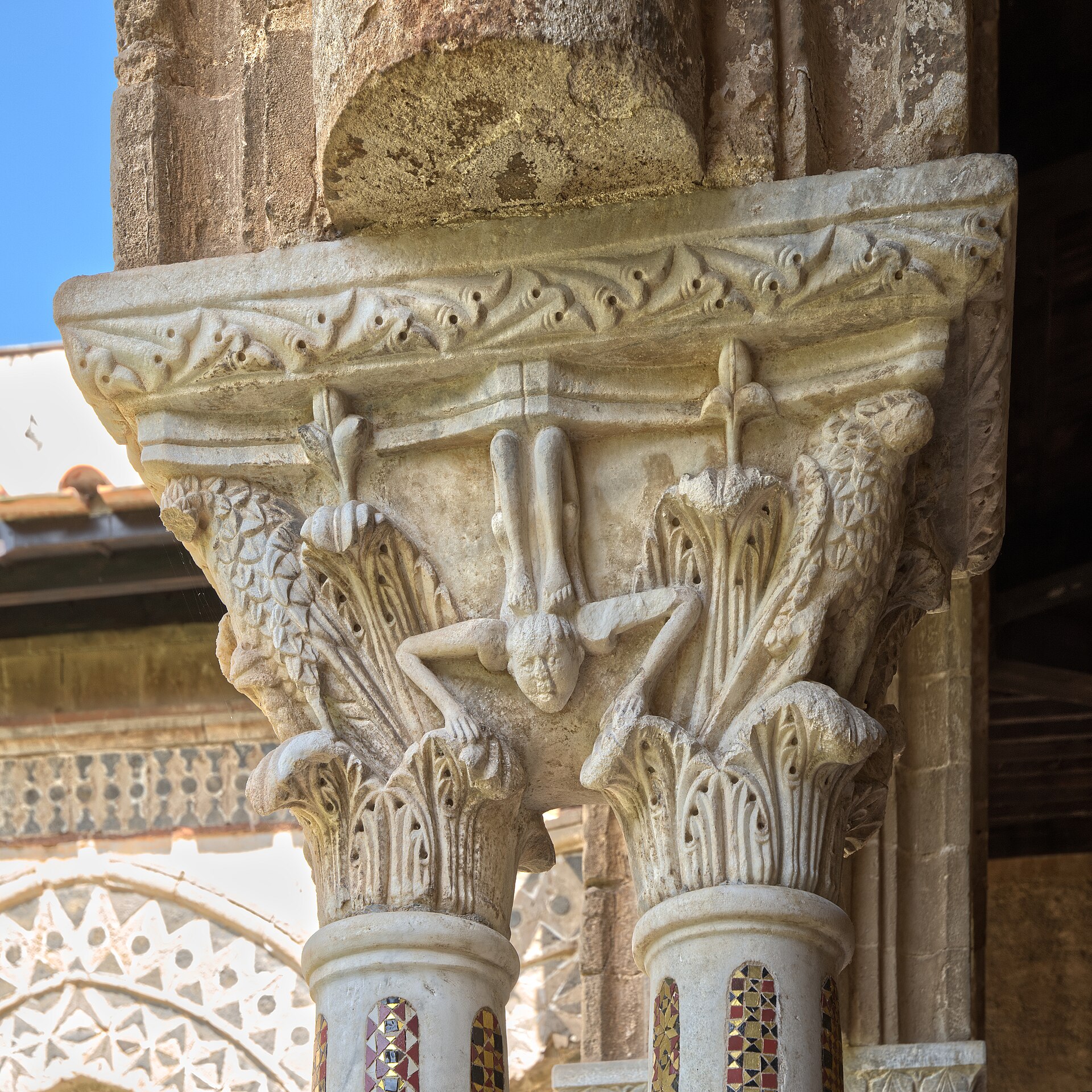
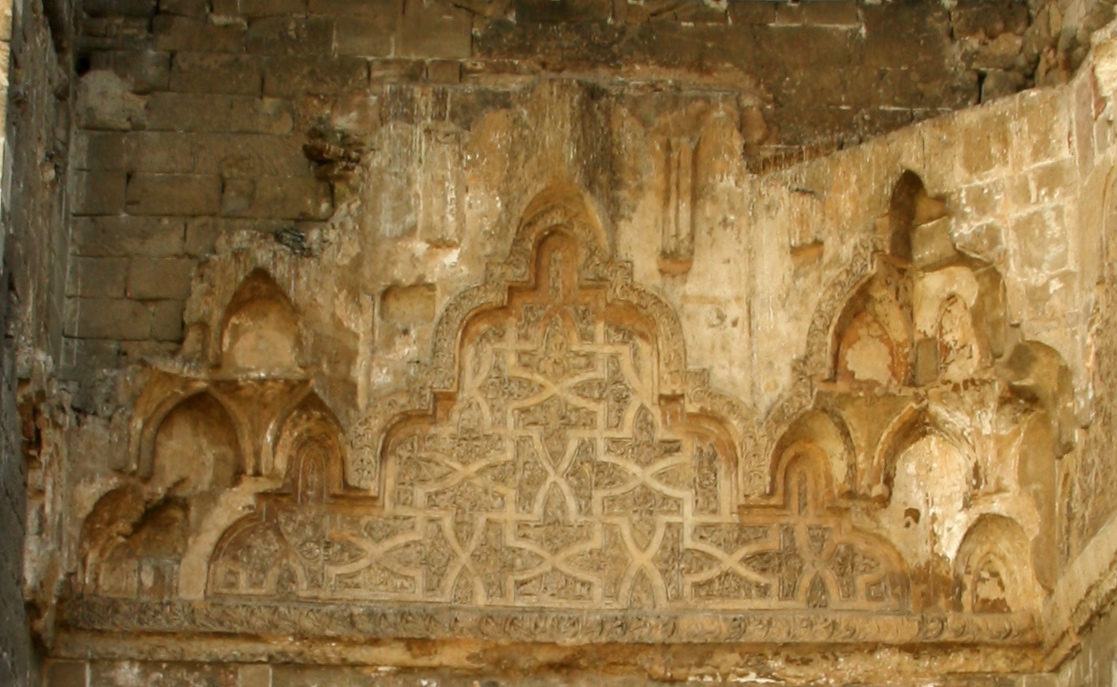
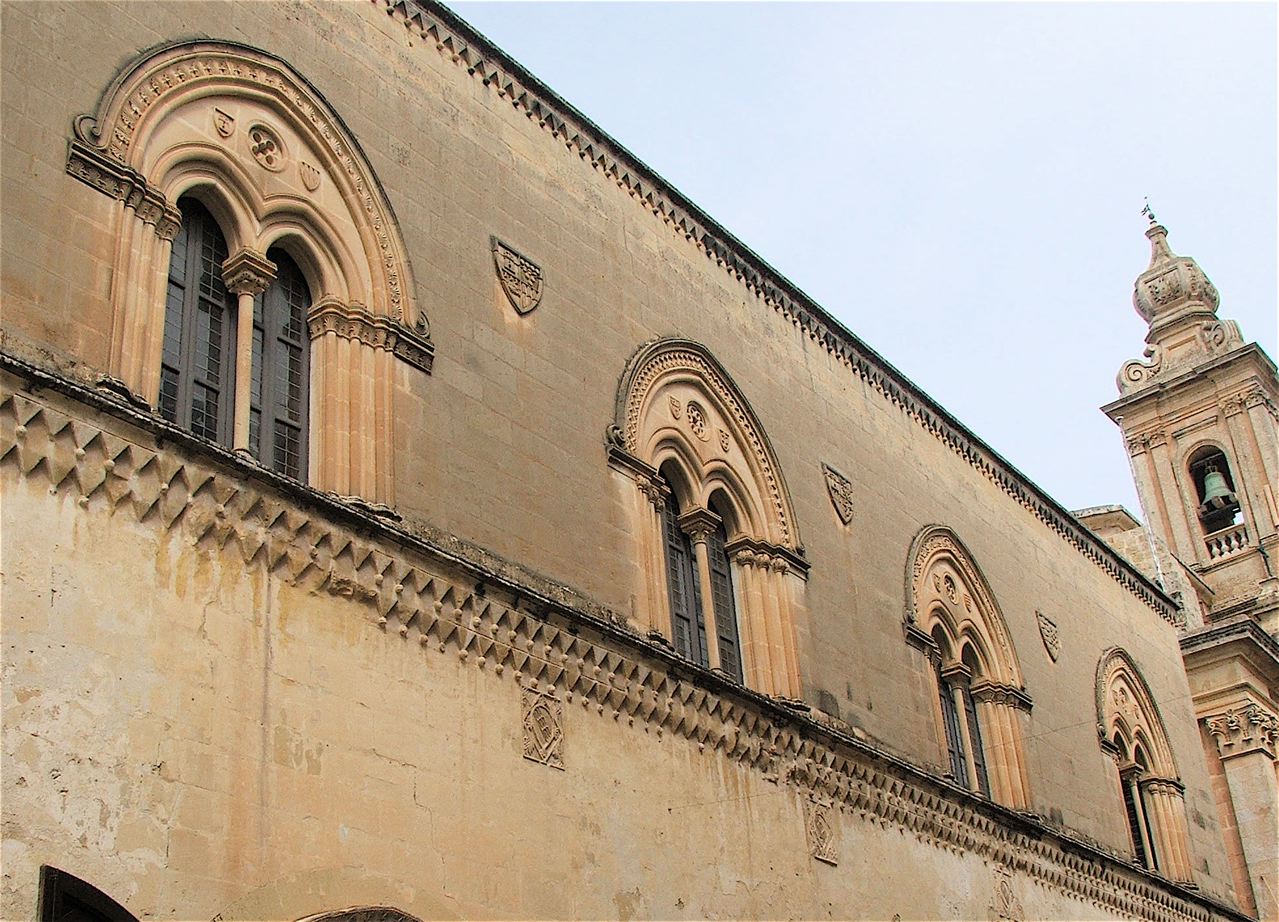
Norman-era architecture in Sicily arose from an encounter that can be observed directly in the buildings themselves. The arrival of the Normans in the eleventh century brought new Western cultural references, accompanied by Arab and Byzantine motifs. The new Western references did not erase what had existed before. The new power made use of the skills, forms, and materials available on the island, placing them at the service of churches, palaces, and other buildings. It is this coexistence that makes a Norman itinerary particularly instructive: each monument reveals a different choice and invites us to look for the relationship between plan, structure, and decoration.
Cefalù Cathedral
The cathedral of Cefalù is an effective starting point. It was commissioned by Roger II and built in the twelfth century. The facade with its two towers has a layout inspired by northern European models. Other components of the building engage with Arab decorative techniques and with the Byzantine basilican tradition. If one limits oneself to calling the cathedral "Norman," one loses the most interesting part of the story. The name denotes a political and cultural era, while the forms of the building reveal a collaboration of knowledges. Looking from the outside and then entering allows one to perceive the transition between a monumental profile facing the city and an interior space organized for the liturgy.
The churches of Palermo
This process can be traced in numerous churches. In Palermo one encounters the cathedral, the Magione, the Martorana, and the buildings associated with San Giovanni; in Messina, the Annunziata dei Catalani; in Mazara del Vallo, San Nicolò Regale; near Castelvetrano, the Santissima Trinità di Delia. The variety of locations prevents reducing Norman architecture to a single center. Each stop has its own construction history and subsequent modifications, so it is useful to distinguish what belongs to the original design from what was added later. An arch, a tower, or a decoration can take on different meanings when placed within the sequence of the building's phases.
A comparison among these monuments also teaches us not to always look for the same combination of elements. In one place the shape of the plan may stand out, in another the arrangement of the openings, elsewhere the relationship between restrained surfaces and decoration concentrated in precise areas. The fusion of styles was gradual and sometimes came about through the addition of motifs to earlier works. There is therefore no ready-made formula to apply to every church. Observation must proceed from the particular to the whole: which parts draw the eye, how they are constructed, what function they serve, and how they dialogue with the rest?
Mosaics and Monreale
The mosaics of the Martorana and the Cappella Palatina constitute an essential part of Norman artistic production, but their figurative language has roots chiefly in Byzantine tradition. The court promoted buildings in which those images coexisted with architectural and decorative elements from other traditions. In the Cappella Palatina, for example, the painted wooden ceiling points to Islamic craftsmen and models, while the mosaics develop themes and forms of Eastern Christian culture. The result is not an indistinct "Arab-Byzantine" technique: each component has its own history and its own function within the whole. By looking at where the figures are placed, how light reaches the tesserae, and how the ceiling closes the space, one better understands the patrons' choice to bring different knowledges together in a court chapel.
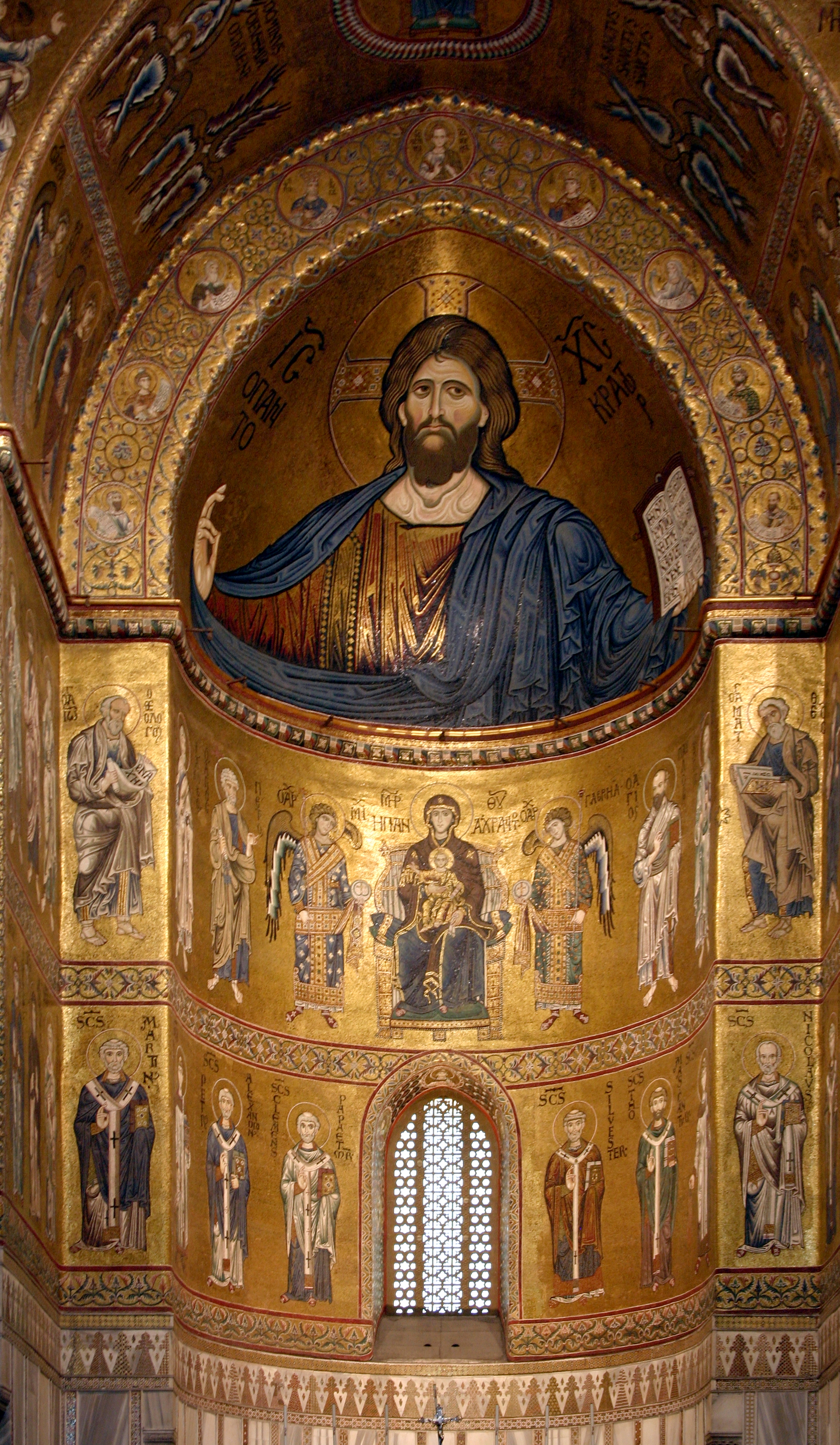
The cathedral of Monreale, a masterpiece of Norman architecture, expands this itinerary. The Christ of the main mosaic and the cloister of the adjoining Benedictine convent invite us to look at the entire complex, going beyond a single famous image. The interior decoration speaks a visual language different from the spaces of the cloister, yet both parts belong to the life of the complex. Monreale also allows us to observe how great religious patronage used art to make a spiritual order legible and, at the same time, to represent the prestige of those who promoted it.
Beyond the great monuments
The Norman legacy does not concern only the great buildings that attract the most visitors. Other examples are the cloister of San Bartolomeo in Lipari, the churches of Santi Pietro e Paolo in Forza d'Agrò, the cathedral of Agrigento, and the parish church of Caltabellotta. These places make visible the extent of an architectural culture that adapted to different cities, islands, and territories. The cloister of Lipari offers a comparison with the complexes of the mainland; Forza d'Agrò shows how the religious language reached centers of a different scale. The distances between these places invite reflection on the circulation of craftsmen and models across the sea and the island's inland routes. In both cases the landscape around the building becomes part of the observation. To construct an itinerary, it is more useful to choose a few clear comparisons than to accumulate stops. Cefalù and Monreale help one read the great patronage; a lesser-known church shows how certain principles were reinterpreted on another scale.
From Cefalù to Palermo and Monreale, the Norman building sites responded to different programs: a cathedral commissioned by Roger II, a chapel linked to the royal palace, a great complex promoted by the monarchy and also entrusted to monastic life. Differences in function explain why forms and decorations do not always combine in the same way. One can trace the relationship between exterior and interior, between images and liturgy, between building and city. Along this path, "Arab," "Byzantine," and "Western" are useful labels only if they help identify precise techniques and the choices of patrons. The Norman legacy is not a repeated stylistic formula: it is the ability to build, in different places on the island, buildings coherent with the plural society and the power of the kingdom.
Photo: Berthold Werner · CC BY-SA 4.0 · Wikimedia Commons