EN
EN Italiano
 Français
 Deutsch
 Polski
 Nederlands
 Español
 日本語
日本語 Čeština
 简体中文
简体中文 Русский
 Português
 한국어
한국어 Magyar
 Norsk
Norsk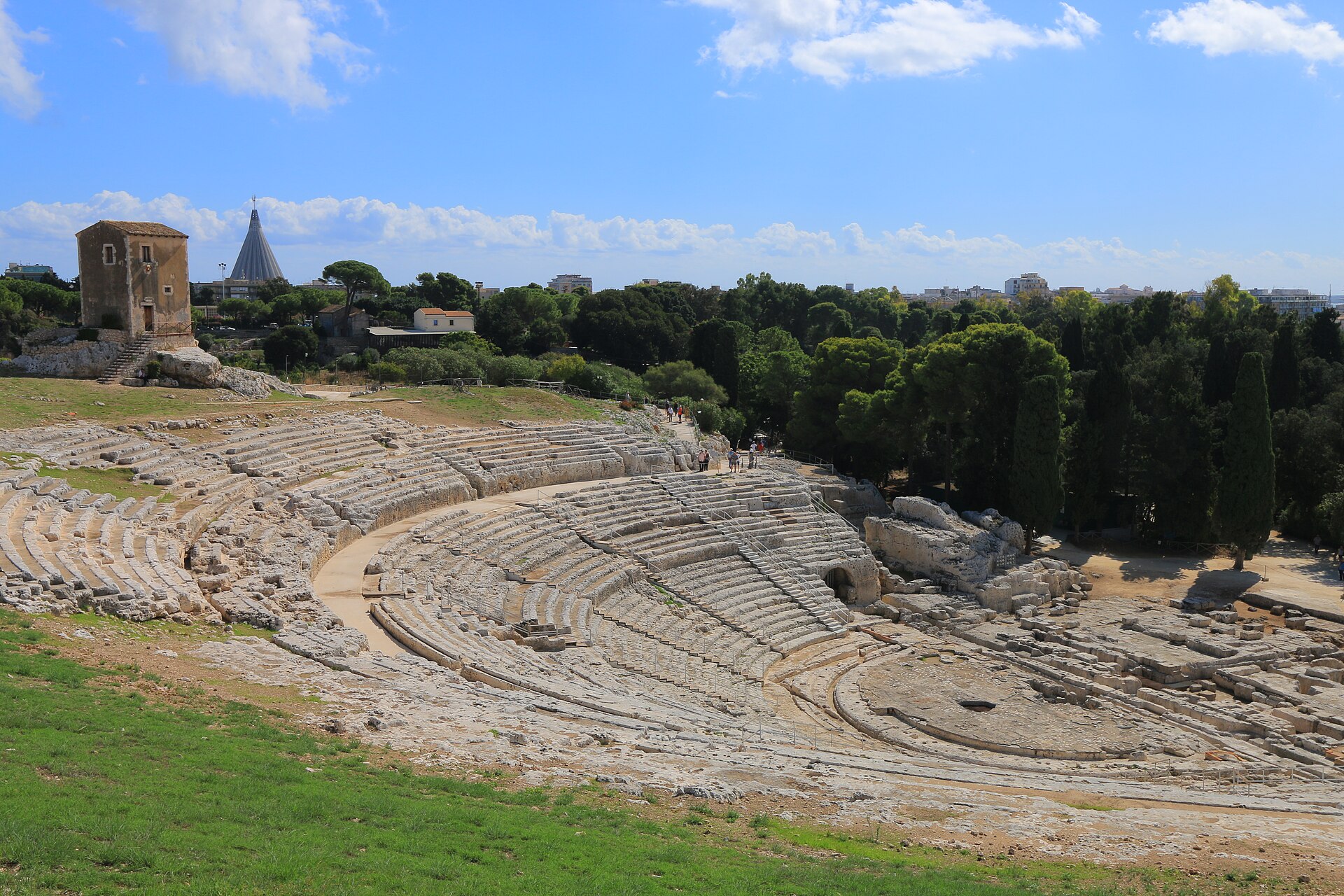
The word "tyrant" today primarily evokes the violence of personal power. In the world of the Greek cities of Sicily, it denoted a form of government born under specific political conditions: one individual succeeded in concentrating authority beyond the balance of civic institutions. The season of the tyrants matured during the growth of the colonies, amid the wealth produced by trade and the tensions between social groups. The cities could build temples, theaters, and ambitious districts, but prosperity did not guarantee stability. It is precisely this intertwining of economic success and conflict that explains why certain leaders acquired exceptional power.
The Greek colonies preserved the language, cults, and urban forms of their places of origin. Alongside the agora, public buildings, temples, and colonnades, one must consider the political structure of the earliest communities: influential families controlled resources and decisions. The local populations, though living in the territories dominated by the cities, could remain excluded from public life. This distance fueled discontent. Within the poleis themselves, rivalries existed among groups capable of claiming power. When the city had to react to an external danger, the normal mediations could appear too slow or insufficient. In such fractures, strong figures found their space.
Carthage and the Battle of Himera
Internal rivalries were intertwined with the pressure exerted by Carthage on western Sicily. The Battle of Himera in 480 BC, which ended with the defeat of the Carthaginian army led by Hamilcar, strengthened the prestige of the victors. In the Greek cities, military success could be celebrated with sacred buildings and public dedications: the Temple of Athena in Syracuse is associated by tradition with that season of victories. The link between war and monument is not merely symbolic. Those who led the defense gained consent and resources, while the city displayed its strength to its inhabitants and rivals. The same victory, however, did not eliminate the social tensions that had favored the rise of personal rulers.
Syracuse and its rulers
Syracuse is one of the places where this political history can be traced with the greatest clarity. The power of its rulers extended toward other cities as well and made the polis a decisive player in the balance of the island. The figure of the tyrant, however, should not be read as an identical role for all rulers. Some imposed themselves through the army, others consolidated their position through alliances, control of resources, and public works. In every case, the fundamental problem remained the same: what space remained for civic institutions and for those who were not part of the dominant group? Personal authority could produce rapid decisions, but also dependence on the strength of a single individual.
After the disappearance of the strongest rulers, the weakness of their heirs and widespread discontent made new political transformations possible. Some cities sought to free themselves from personal dominion and to broaden participation in the assemblies. This passage did not automatically resolve the relationship with the local populations. The revolt of Ducetius, who led Sicel groups in the fifth century BC, is remembered as proof of the persistence of conflict. Viewed from this perspective, the age of the tyrants is not an interlude between two orderly eras. It is a phase in which it was debated, sometimes with arms, who could decide the future of the island.
Athens and Dionysius the Elder
The rivalry with Athens added a broader dimension. The Athenian expedition against Syracuse and its defeat showed how much the Sicilian balance involved distant powers. The presence of one of the greatest powers of the Greek world in Sicilian affairs shows how central the island was in the Mediterranean. Athens did not regard Syracuse as a marginal center; it feared its strength and measured its strategic possibilities. External wars could strengthen the authority of those in command, but they consumed resources and forced cities into difficult choices. The boundary between protection of the community and consolidation of personal power was often thin.
Later, Dionysius the Elder represented another form of concentrated power. Dionysius established himself as a skilled strategist, supported by mercenaries, committed to fortifying Syracuse and fighting Carthage. After him, the struggles between Dionysius II and Dion showed how vulnerable the system was to successions and internal conflicts. The case of Syracuse thus allows one to follow a cycle: rise in a moment of crisis, military expansion, great defensive investments, and difficulty in maintaining a stable balance. Personal power could leave monuments and walls, but not always institutions capable of surviving without the leader.
Reading the archaeological remains
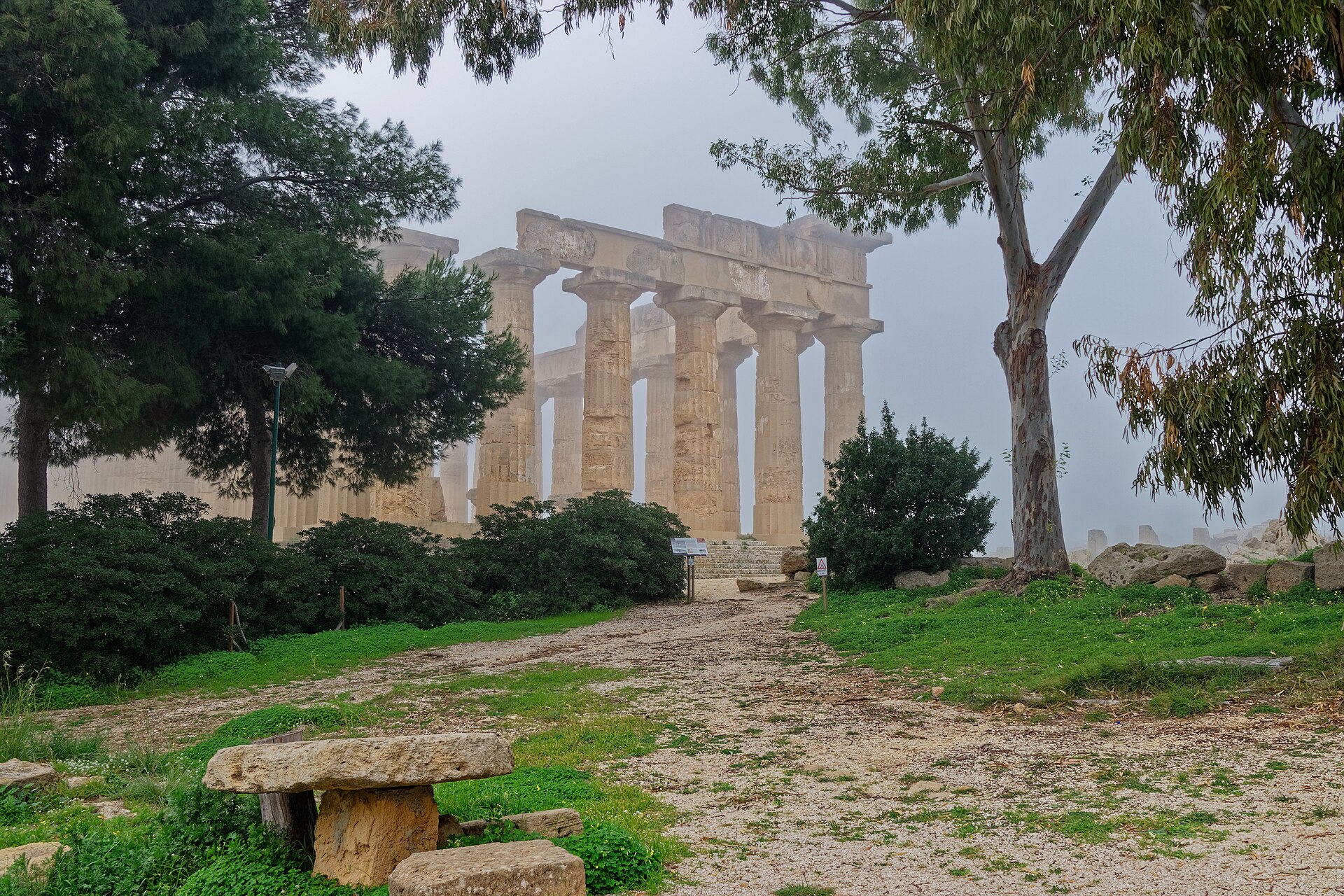
Archaeological remains become more eloquent when connected to these questions. The theater of Syracuse evokes the cultural life of a powerful city; the Temple of Athena recalls the celebration of a victory; the fortifications point to the fear of a siege. No building, by itself, proves whether a government was just or unjust. It is the sources and the comparison between episodes that reveal the ambitions and contradictions of the era. To recount the tyrants means to speak at once of wealth, exclusion, war, and participation: four themes that ran through Greek Sicily and influenced its history for a long time. This reading also makes visible the distance between the splendor celebrated by the victors and the experience of those who had no voice in collective decisions.
Photo: Benjamin Smith · CC BY-SA 4.0 · Wikimedia Commons