EN
 Italiano
 Français
 Deutsch
 Polski
 Nederlands
 Español
 日本語
 Čeština
 简体中文
 Русский
 Português
 한국어
 Magyar
 Norsk
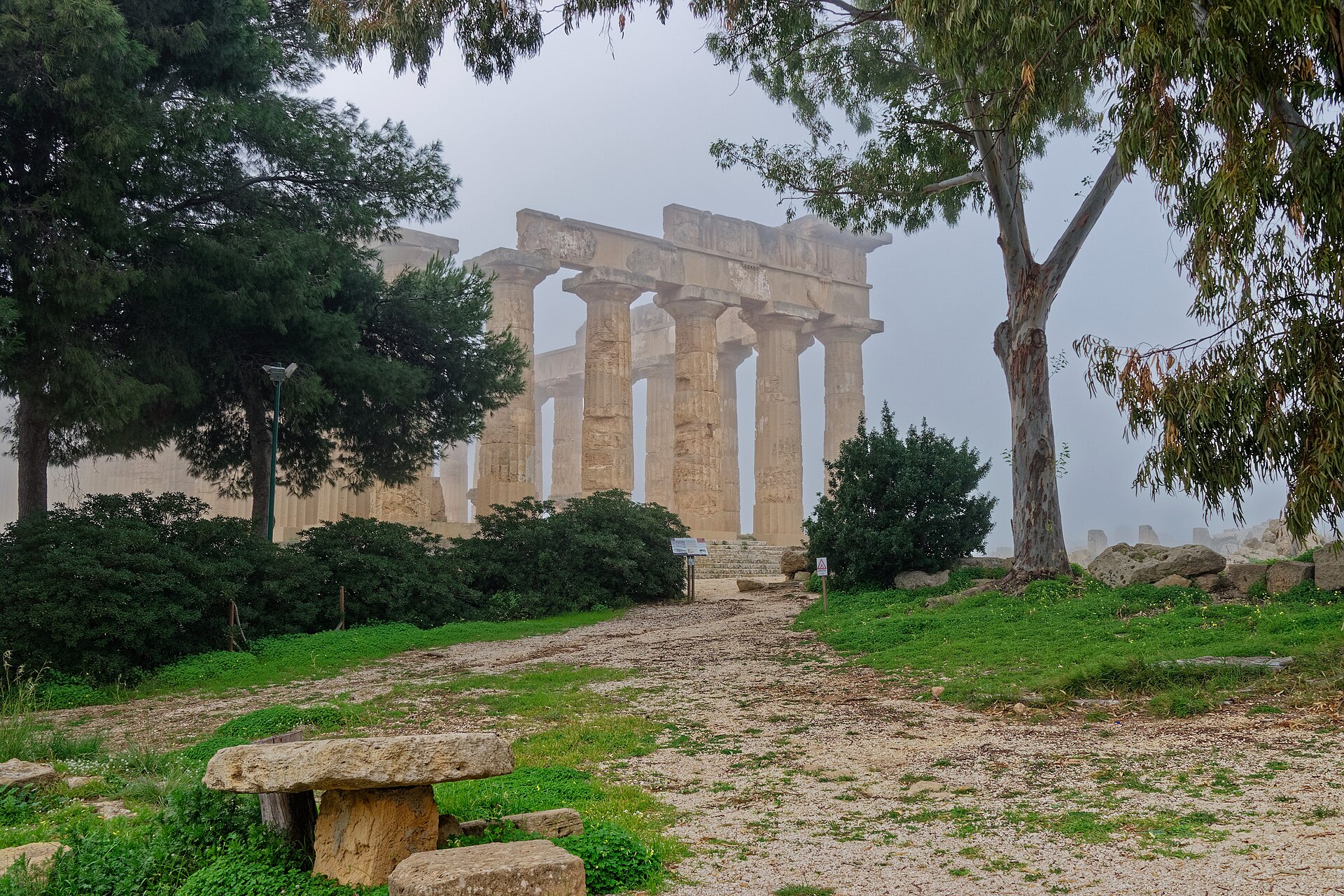
Temples are among the most visible legacies of ancient Sicily, but they acquire meaning when placed back in relation to the cities that built them. The Greek presence on the island left behind sanctuaries, theatres, walls, dwellings, and objects of everyday use. Agrigento, Selinunte, Segesta, Gela, Syracuse, and numerous other sites offer differing examples of Sicily's archaeological heritage. Some preserve large standing structures; others require the observer to study foundations, fragments, and traces in the ground. The difference does not measure the historical importance of these places. A less monumental area can reveal in precious detail how spaces were organized and what activities accompanied the religious life of the cities.
How a temple was built
The Greek temple was a sacred building set within a landscape that was designed and lived in. The temple rested on a stepped base, with the stylobate supporting the columns; the peristyle surrounded the inner section, and the capitals bore the upper elements. Inside was the cella, or naos, linked to the presence of the deity. Knowing these terms is not about reciting a vocabulary before the ruins. It helps to distinguish what remains standing from what is missing: a row of columns can suggest the perimeter, a platform the original floor level, an inner wall the shape of the cella. Mental reconstruction makes the visit more precise.
Decoration played a role as important as the structure and completed its visual meaning. Panels of coloured terracotta and relief metopes adorned the buildings; sculpture was not an addition independent of the architecture. The metopes from the temples of Selinunte, preserved in the museum, allow close observation of figures and compositions that originally stood high up, integrated into the facade. This displacement changes the experience: in a museum one grasps details that an ancient visitor would have seen from the ground, but the relationship with light and with the complete building is lost. To truly understand the monument, it is useful to combine a visit to the archaeological area with one to the objects moved for their preservation.
Agrigento and Selinunte
Agrigento offers a remarkable concentration of evidence. The Temple of Concordia, the Temple of Castor and Pollux, and other buildings of the Valley of the Temples form an archaeological ensemble of great variety. Among these sanctuaries is also that of Olympian Zeus, the Olympieion, with its imposing male figures called telamones. Their scale suggests the ambition of the project and the role of architecture in making a city's prestige visible. Before these remains, one should observe not only the individual temple but its placement relative to the other sanctuaries and the surrounding territory. The "valley" is a complex landscape, not a collection of facades separated from one another.
Selinunte allows a deeper exploration of another aspect: the relationship between city, acropolis, and sanctuaries. The walls, temples, and metopes of Selinunte show the majestic presence of the buildings on the acropolis and their relationship with the territory. Such an extensive site requires imagining different routes and functions. Those who crossed the ancient city encountered not only religious ceremonies but also inhabited and defended spaces. The proximity of the sea also evokes the dimension of connections: materials, people, and ideas reached Sicilian cities along Mediterranean routes. The scale of the temples becomes more comprehensible when one considers the economic and political strength required to build and maintain them.
Segesta and the other cities
Segesta tells a different story from that of the better-known Greek colonies. The temple near Monte Barbaro recalls the culture of the Elymians and their contacts with the Greek world. It is a case that invites us to avoid rigid labels: an architectural form of Hellenic origin could be adopted and reinterpreted by a community with its own identity. This too is part of Sicily's artistic history. Monuments are not always proof of a complete replacement of peoples or beliefs; they can arise from relationships, selective imitation, and local decisions. To look at a temple therefore means asking who commissioned it, not merely recognizing the style of the columns.
Cities less present in the tourist imagination complete the picture. Among places of archaeological interest are also Megara Hyblaea, Naxos, Gela, Himera, Adrano, Akrai, and Morgantina. At Gela the excavations of the acropolis are notable; at Himera the archaic sanctuaries and the so-called Temple of Victory; at Adrano the walls and traces of an indigenous centre. Each stop reveals a different part of ancient life. An acropolis highlights the structure of urban space; a sanctuary tells of religious practices; a circuit of walls evokes defence and boundaries; an indigenous settlement allows us to consider Sicily before and alongside the Greek foundations. The island's history emerges from the comparison of these contexts, not from the search for the single most photographed monument.
Stone, forms and comparisons
Materials matter too. Warm-coloured limestone and forms inspired by the Doric order characterize many monuments, which originally may have had vivid decoration. The appearance we see today is the result of weathering, collapse, restoration, and the loss of coloured elements. For this reason, ruins must not be imagined as buildings that were born in the uniform tone of exposed stone. Where decorative fragments remain, the distance between the present monument and the original design becomes evident. At the same time, local material ties the architecture to the ground: a temple is not an abstract idea transported to the island, but a work built with concrete resources and craftsmanship.
The comparison between Agrigento, Selinunte, and Segesta clarifies how different the context of the three sanctuaries is. At Agrigento many sacred buildings belonged to the monumental landscape of a great Greek city; at Selinunte the arrangement of the temples is read together with the acropolis and the inhabited sectors; at Segesta an Elymian community adopted an architectural language linked to the Hellenic world. Museums complete this comparison: metopes, coloured fragments, and votive objects show parts that the open-air ruin no longer preserves. A column left standing is only a portion of the original building. Reconstructing the relationship between structure, decoration, and city makes it possible to understand for which communities those monuments were built and why they differed from one another.
Photo: Holger Uwe Schmitt · CC BY-SA 4.0 · Wikimedia Commons