EN
 Italiano
 Français
 Deutsch
 Polski
 Nederlands
 Español
 日本語
 Čeština
 简体中文
 Русский
 Português
 한국어
 Magyar
 Norsk
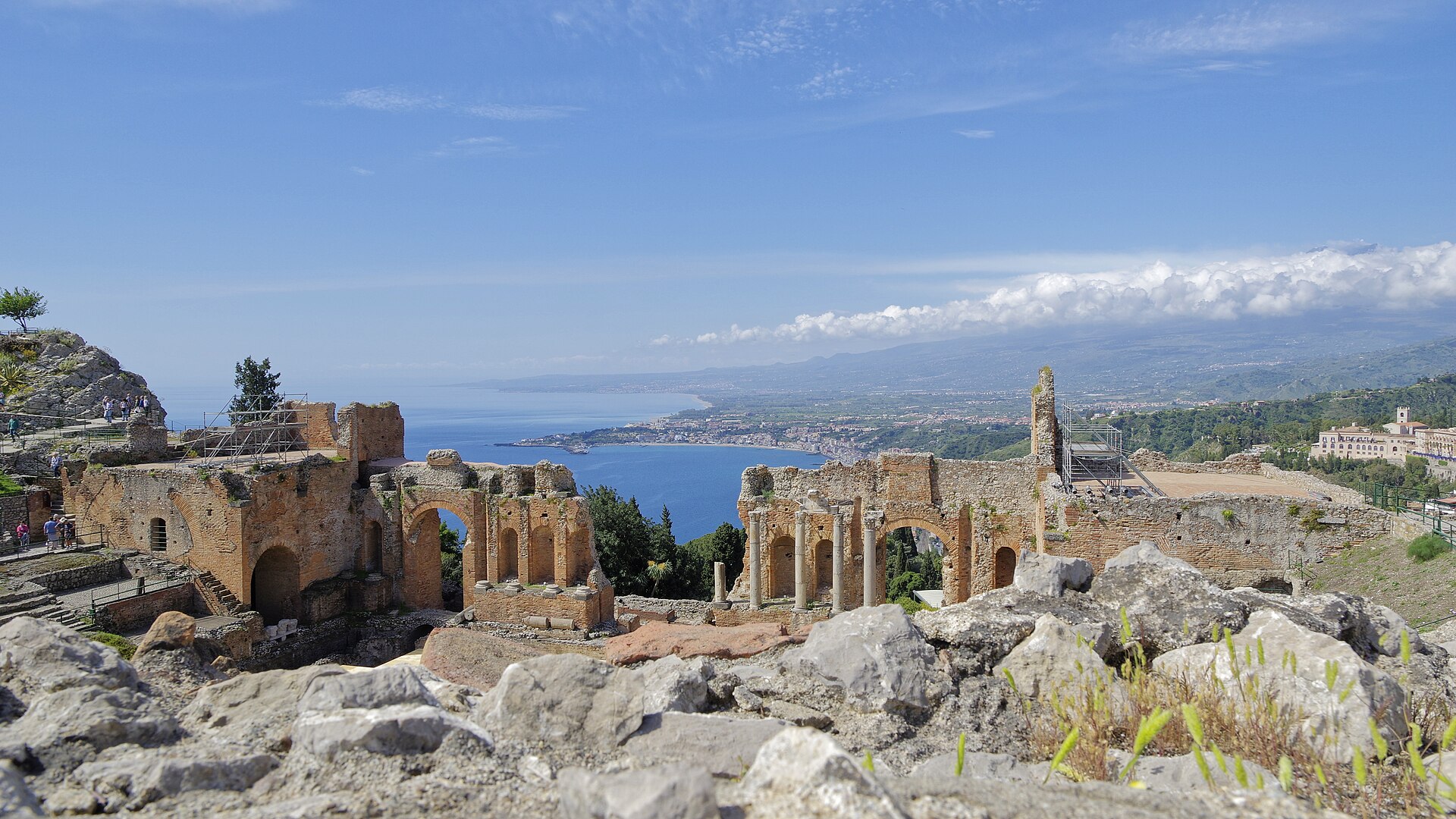
The ancient theatres of Sicily are best understood when viewed as buildings constructed to bring people together. Syracuse, Segesta, Catania, Taormina, Tindari, Heraclea Minoa and Akrai offer examples of ancient theatres in different contexts. The variety of locations is itself a lesson: there is no single Sicilian theatre, identical in every city. Size, position, state of preservation and subsequent transformations change the visitor's experience. What they share is the relationship between a space for spectators, an area for performance and the surrounding landscape. The tiers and curved forms we observe today are the result of practical choices, but also of a precise idea of public life.
How the cavea worked
The cavea, that is, the ensemble of tiers, allowed a large audience to follow what took place in the stage area. Its shape often exploited the natural slope, adapting the architecture to the hillside. In front of the tiers opened the orchestra; beyond it were the structures necessary for the stage. Recognising these parts helps one not to mistake the theatre for a simple sequence of stone seats. Access routes, visibility and the distance between audience and performers were concrete problems that builders had to solve. Even an incomplete ruin retains clues about those solutions, if one observes it while thinking about the movements of the people who frequented it.
Syracuse and Segesta
The theatre of Syracuse was one of the largest in the Greek world, a sign of the city's importance. Its scale expresses the importance of the city and its capacity to organise collective events. But size alone does not explain everything. One must imagine how the building was reached, where the audience was arranged, how the slope offered a view and in what way the structure engaged with the rest of the city. In front of the theatre there is also the altar of Hieron II: in that area several monuments participated in the representation of power and civic religion. Considering them together allows one to see an urban sector, not an isolated building.
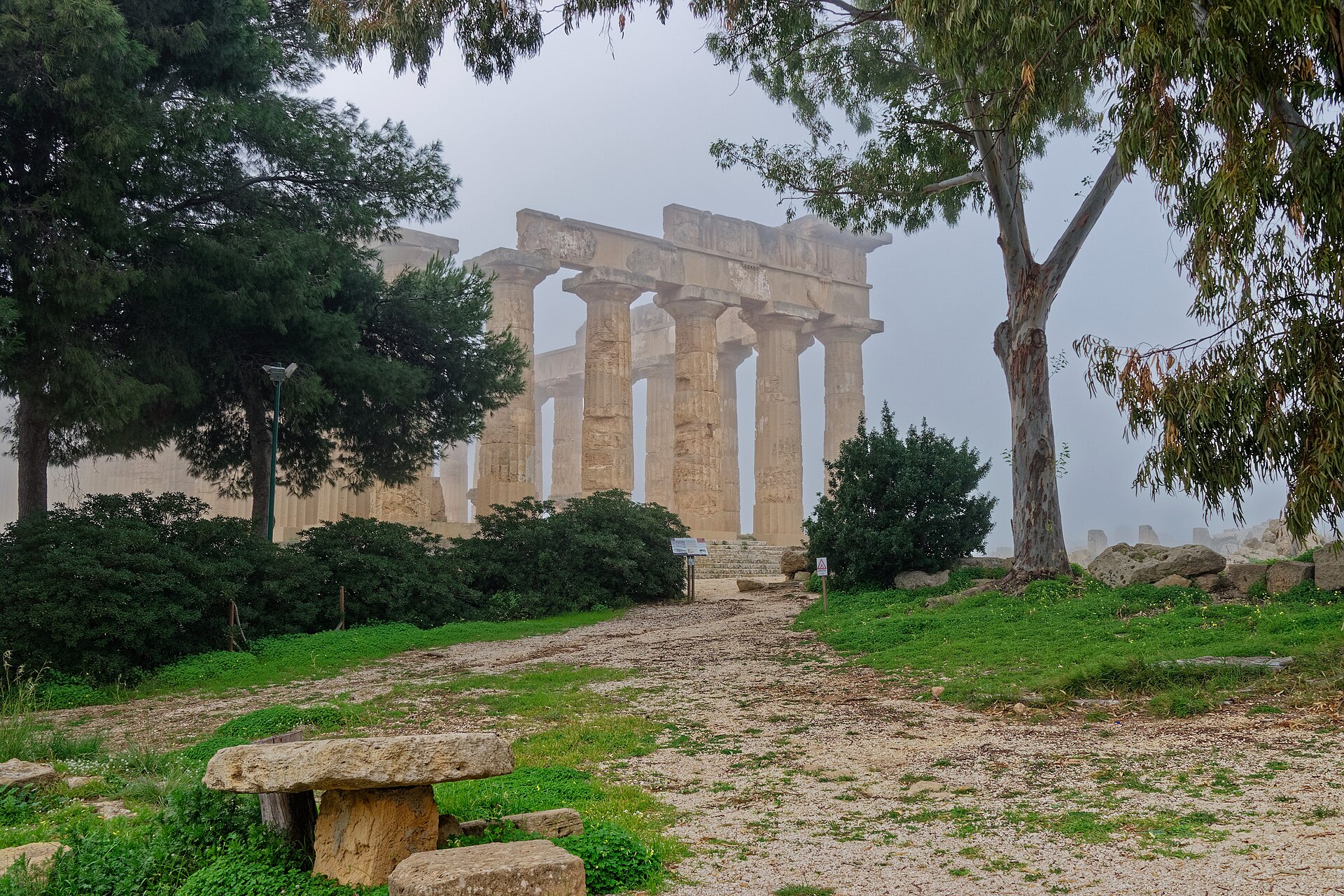
Segesta offers a different experience. Segesta preserves both the theatre and the temple near Monte Barbaro, in a context linked to the history of the Elymians and to contacts with the Greek world. Here the relationship with the terrain is particularly important for understanding the perception of space. The gaze of those seated on the tiers did not meet only the stage: it opened onto the landscape. We do not know how much each panorama influenced individual performances, but we can recognise that the building was placed within a precise geography. An ancient theatre should therefore not be measured only by capacity or architectural elegance; it should be seen as part of the territory of the community that built it.
Theatres that changed over time
Taormina and Tindari help us understand how much a long life can modify a theatrical building. The theatres of these cities are important testimonies of ancient Sicily and underwent, in the Roman period, interventions of restructuring and enlargement. A monument visitable today may therefore contain different phases. One part of the complex responded to the original requirements, while other elements were adapted to later audiences, stage techniques or tastes. Identifying these passages requires attention: a better-preserved surface is not always the oldest. The construction history of a theatre can be almost as complex as that of the city that hosted it.
Comparison with Heraclea Minoa and Akrai broadens the view beyond the most celebrated names. The theatre of Heraclea Minoa and the well-preserved one of Akrai deserve comparison; at Akrai there is also a building interpreted as a bouleuterion. These contexts make it clear that the space for attending performances was inserted into a broader system of public buildings. Anyone visiting an archaeological site should observe the distances between structures, the possible routes and the relationship with inhabited areas. A theatre deprived of its context seems an autonomous object; situated within the city, it reveals instead the place that collective gatherings held in the life of the community.
Catania shows with particular clarity the stratification of periods. The city's theatre belongs to ancient architecture, while the amphitheatre testifies to a subsequent Roman phase. They are different buildings, linked to different types of spectacle and to different ways of organising the audience. Calling every ruin a "theatre" would erase this distinction. Syracuse also possesses a Roman amphitheatre, alongside the better-known Greek theatrical tradition. Placing the two buildings side by side helps one observe how Roman rule added new constructions and new requirements alongside inherited venues. History did not advance by systematically eliminating what existed: it often added, adapted and reinterpreted.
Reading the stones and today’s performances
The material of the buildings makes this reading possible. Worn steps, reused blocks and reconstructed parts show the passage of time. The local stone of warm colour characterises part of Sicily's ancient architecture; light and shadow can greatly change the perception of a cavea over the course of the day. Observing the quality of the stone is not merely an aesthetic pleasure. It means asking how it was cut, placed and maintained, and what labour was required to create a space capable of accommodating a large audience. Subsequent maintenance, too, formed part of the monument's life: no building intended to last for centuries remains identical without interventions.
Some theatres still host performances, and this creates an immediate encounter between contemporary audiences and ancient architecture. The experience, however, does not cancel historical distance. A modern production uses techniques, languages and rules different from those of the communities that built the edifice. Precisely this difference can make the visit more interesting: the theatre continues to be a shared space, while the meaning of performances changes. During a visit it is worth recognising both the original structure and the subsequent Roman transformations. Watching a performance or walking the tiers at leisure are two complementary ways of understanding the place, provided one knows what belongs to the ancient monument and what to its current life.
Comparing Syracuse, Segesta, Taormina and Akrai does not mean establishing which theatre is the most beautiful. Syracuse helps one gauge the scale of a great polis; Segesta links the tiers to the position of Monte Barbaro; Taormina clearly shows the long transformation of the building; Akrai allows one to observe a theatre within a centre of more modest dimensions. At Catania and Syracuse, comparison with the Roman amphitheatres also makes clear that forms similar to a cavea could serve different spectacles. It is these relationships between building, city and use that make the remains legible. Observing where the audience entered and how the stage space joined the tiers restores to theatres their function as collective places, even before their status as celebrated panoramas.
Photo: Berthold Werner · CC BY-SA 4.0 · Wikimedia Commons