EN
EN Deutsch
 Italiano
 Français
 Polski
 Nederlands
 Español
 日本語
日本語 Čeština
 简体中文
简体中文 Русский
 Português
 한국어
한국어 Magyar
 Norsk
Norsk
The Etna refuge system is a fundamental logistical and safety network for exploring Europe's highest active volcano. These structures are not simply places to rest, but strategic outposts located in a dynamic environment where weather conditions and volcanic activity can change suddenly. A thorough knowledge of their location and type is a primary requirement for any hiker who intends to tackle the Etna trails with awareness.
Key Points
Extensive network: The area is covered by managed refuges (with hospitality services), forest shelters (always open), and high-altitude scientific bases.
North and South sides: The main hubs are the Sapienza Refuge in the south and the Piano Provenzana area (with the Brunek and Ragabo refuges) in the north.
High altitude: At over 2,400 meters, structures such as Capanna Pizzi are the last point of shelter before the summit craters.
Safety and Orientation: In case of fog or bad weather, refuges serve as morphological beacons in a landscape often devoid of other visual references.
1. Managed Refuges: Logistics Hubs and Services
These facilities, mainly accessible via the road network (Mareneve or SP92), offer comprehensive accommodation, catering and technical assistance services.
| Refuge | Side | Altitude | Characteristics |
| South (Nicolosi) | 1,910 m | Historic logistics center, home to the cable car and Alpine Rescue headquarters. | |
| Citelli Refuge | North-Easth (S. Alfio) | 1,740 m | Base camp for the ascent to the serra Serracozzo and the view over the Valle del Bove. |
| Brunek Refuge | North (Linguaglossa) | 1,420 m | Located on the Mareneve road, a historic landmark for winter tourism. |
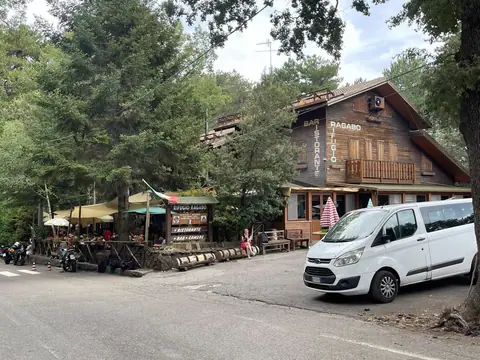
| Ragabo Refuge | North (Linguaglossa) | 1,415 m | Nestled in a centuries-old black pine forest, it offers comprehensive hospitality services. |
| Monte Conca Refuge | North (Linguaglossa) | 1,830 m | Located at Piano Provenzana, it serves as a base for excursions to the summit craters. |
| Ariel Refuge | South (Nicolosi) | 1,715 m | Located in Piano Vetore, ideal for astronomy and mid-altitude trekking. |
2. High Altitude Facilities and Monitoring
Above the vegetation line, where the environment becomes exclusively mineral, there are essential structures for monitoring and emergency shelter.
Capanna Pizzi Refuge (2,420 m): Located on the north side, above Piano Provenzana. It is a lava stone structure overlooking the Valle del Leone. It is a crucial stopping point for hikers heading to the Volcanological Observatory.
Pizzi Deneri Observatory (2,818 m): Managed by the National Institute of Geophysics and Volcanology (INGV). Although it is a scientific facility closed to the public, it is the highest reference point on the volcano and serves as a safety base for authorized personnel and volcanological guides.
3. Forest bivouacs and the High Mountain trail
The bivouacs are unattended structures managed by the State Forestry Agency. They are always open for emergency purposes or basic camping. Most are located along the Pista Altomontana (High Mountain trail), a 42-kilometer loop that circumnavigates the volcano at an average altitude of 1,700-1,800 meters.
Galvarina Refuge (1,878 m): A key point on the south-western slope, located in an area of great geological interest.
Monte Scavo Refuge (1,785 m): Located on the western slope, it offers shelter in an area characterized by woods and ancient lava flows.
Monte Maletto Refuge (1,701 m): Important panoramic viewpoint overlooking the Nebrodi Mountains.
Poggio la Caccia Refuge (1,920 m): Small structure located in a high-altitude area, extremely isolated.
Passo di Sella Refuge (1,725 m): Located on the northwestern slope, near the Timparossa beech forest.
Saletti Refuge (1,373 m): Easily accessible from the north side, often used for short hikes.
Timparossa Refuge (1,844 m): Nestled in one of Europe's highest beech forests, known for the color contrast between the black rock and autumn leaves.
4. History and Resilience: The Case of the Philosopher's Tower
Talking about refuges on Mount Etna also means acknowledging their precariousness. The Torre del Filosofo (Philosopher's Tower), located at an altitude of about 2,900 meters, has been a symbol of human presence at high altitudes for decades. Dedicated to the memory of Empedocles, the original structure and subsequent prefabricated buildings were completely buried by the eruptions of 2002-2003 and 2013. This event highlights how architecture on Etna is in constant negotiation with the geological activity of the volcano.
Guidelines for Responsible Hikers
The use of refuges, especially unattended ones, requires compliance with specific protocols to ensure their future functionality.
Resource Management and Security
Water supply: There is no drinking water available at forest bivouacs and high-altitude structures such as Capanna Pizzi. Hikers must bring adequate supplies (at least 2-3 liters).
Volcanic Ash: It is essential to ensure that the doors and windows of shelters are tightly closed. Volcanic ash, carried by the wind, is corrosive and can render rooms unusable in a short time.
Waste Management: There is no waste collection service at high altitudes. All waste material must be transported back down to the valley.
Heating: If you use wood from the fireplace, it is ethical practice to replace it by collecting dry branches nearby (where permitted) to ensure the safety of those who arrive in an emergency.
Etna is not a static mountain, but a constantly evolving geological organism. The refuges represent the nodes of a network that allows this extreme territory to be studied, climbed, and temporarily inhabited. Respecting these structures means preserving the integrity of the rescue system and the historical memory of the volcano.